Introduction: Our Mountains
Western North Carolina’s Veteran population is shaped by the realities of rural living, where distance, access challenges, and specialized care needs can create significant barriers. Strengthening support for these veterans and families means expanding access to benefits, enhancing behavioral health resources, and working closely with the Western North Carolina VA Healthcare System in the region to ensure coordinated, reliable care.
— Jocelyn Mitnaul Mallette, Secretary of the North Carolina Department of Military and Veterans Affairs (quote provided via internal correspondence with communications team, North Carolina Department of Military & Veterans Affairs)
The mountains of Western North Carolina are home to a series of geographical and cultural realities that make it a unique and challenging environment for Veterans to navigate. Many Veterans seek out the isolation that the mountains provide, while still allowing them reasonable access to Veteran health care and services. This mentality has created Western North Carolina Veterans that are quite resilient and autonomous. However, our resilience and independence can quickly turn into an obstacle when we are not willing to seek both the physical and mental care that we need.
Hurricane Helene and the storm’s aftermath have made obstacles to improved health noticeably more apparent, as many areas of Western North Carolina are still in active recovery from the damage and trauma the storm brought to the region. A multitude of emotions came back to life in the wake of the disaster. Many of the life-saving activities that we had to take and/or be subjected to during the storm brought back painful and unresolved emotions that were generated during our military service.
Due to these unique geographical circumstances and the mindset that the mountains foster, a different approach to Veteran care must be taken. The quality care that the Asheville Veterans Affairs (VA) Hospital and its community VA outpatient clinics provide is not an issue. In fact, the Western North Carolina VA Health Care System is the only dual-rated 5-star facility1 and is used as a model for Veteran care, including both physical and mental care. However, a much more humanistic and whole-health approach must be taken for the Veterans of these mountains2—one that promotes both human experience and interaction, enveloped in trust that can only be issued by one Veteran to another, without the government’s involvement.
Writing to Heal
Given this Western North Carolina reality, our experiences have shown, time and time again, that the physical process of writing about our traumatic experiences has been the most beneficial method of working through them. It allows Veterans to be in a controlled, safe and calm environment with other Veterans who have all had similarly traumatic military experiences. Our writings are received by our fellow Veterans with no air of judgement. I often tell other Veterans that my personal combat experiences do not need to be validated by other Veterans, and to the same token, their experiences do not need to be validated by me or anyone else. Our experiences are lived in unique manner, often with many layers of moral injury and survivor’s guilt. We have a seat at the table for all Veterans who want to address their emotional growth, regardless of whether it is combat-related or not.
Anatomy of a Class
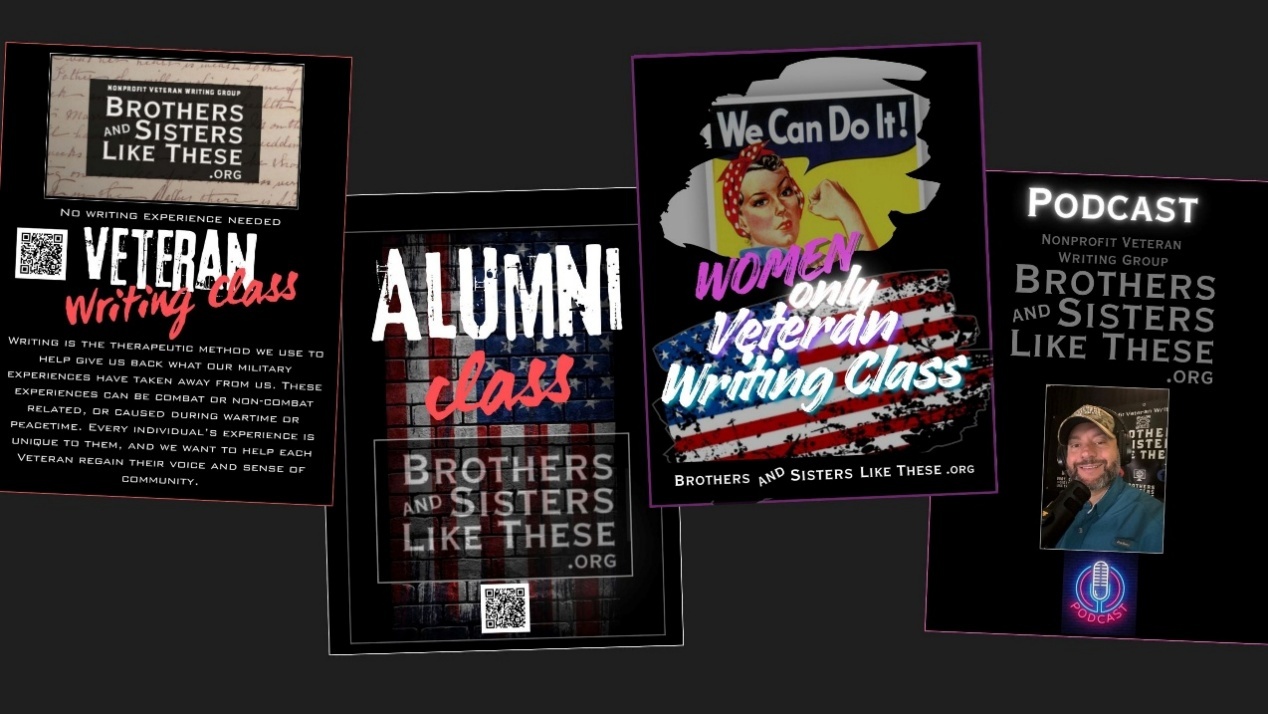
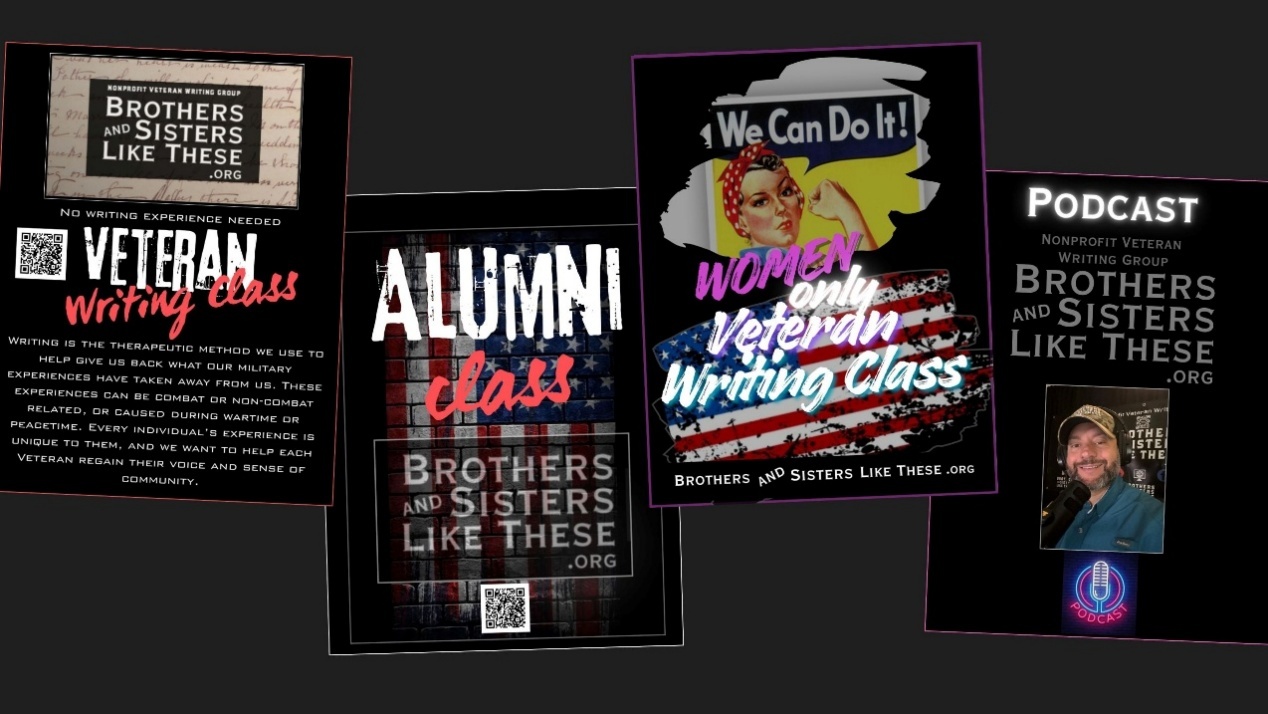
What makes the Brothers & Sisters Like These program unique is best illustrated by three main points. First, the program offers several writing courses: an initial writing course, an alumni writing course, a women-only Veteran writing class, and hybrid/remote classes. Each course lasts eight sessions (once a week for about one to two hours), with a counselor and B&SLT board member who co-facilitate each session. Each class is formatted in a similar manner to create emotional consistency throughout our sessions (Appendix A shows examples of B&SLT program flyers).
The facilitators give prompts that are used by the Veterans to write as it pertains to their own individual experiences. A common first prompt is “Where I’m From,” because it helps the Veterans to introduce themselves to each other and is a good writing transition to incrementally confront more traumatic experiences. After this icebreaker, we conduct a few “fire drills,” which are prompts that facilitators give on the spot with a very limited amount of time (five minutes) to answer. We underline the importance of continuing to write without pause, even in fragmented sentences or streams of consciousness. After a couple of rounds of sharing our fire drill response, the group is now emotionally and physically prepared for one longer prompt of about twenty minutes, after which each Veteran reads to the group. Class is then finished by being issued a take-home prompt, to be written during the week and then read at the start of the next class. The intensity of the prompts is gradually raised according to the particular class’s dynamics and needs. Some past prompts have included: “Getting Ready,” “First Day in Country,” “That Day,” “What I Packed,” “What I Left Behind,” “Coming Home,” “Letter to the Enemy,” and “Civilians.”3
Therapeutic Writing, Not Academic Writing
A special note to consider is that we are a therapeutic writing group—not an academic writing group. We are using the physical process of writing as the medium to heal, not to become authors or writers. Writing is for the emotional benefit of the individual Veteran and is achieved by ensuring that their emotions never outpace the speed of their writing. In fact, the vast majority of Veterans that display emotions do so when they read their piece, or when a fellow Veteran reads a piece in which they see parts of themselves. Emotions are almost never displayed during the writing portion of the session. When Veteran members are asked why they believe this pattern occurs, they note that they are focused on writing and can emotionally handle a 20-minute emotional writing prompt better than reading that same written piece over just a few minutes. This is where the true benefit of therapeutic writing demonstrates its effectiveness. While writing, the Veteran is exposed to an emotionally manageable level. When they read to the group, they are pushed just outside their emotional comfort zone and healing takes place. Our Veteran members can finally share and validate their emotions, many of which have been internalized silently for years. Occasionally, a Veteran chooses not to read their piece, and that choice is always reserved at the discretion of our Veteran participants. Simply taking the courage to answer the prompt and emotionally expose and challenge yourself is a victory in and of itself. Having their emotions slow down to match the speed of writing and to examine their thoughts through the entirety of the traumatic event, rather than just a repetitive mental snippet of rumination, allows Veterans to process their trauma in its entirety and with the proper context.4 The emotional healing that is created transcends the need to have proper written structure, spelling, and grammar; thus, standardized or more academically focused writing is inconsequential and irrelevant to our therapeutic goal.
Secondly, we offer a plethora of activities after a Veteran has taken part in the initial class. Instead of waiting for Veterans to reach out to us, we go into the communities where they live. This is what sets us apart from other nonprofit organizations. We regularly perform B&SLT public reading events, which serve three main goals. First, they inform and educate the public about our Veteran experiences; they ensure that our Veterans have a regular and productive venue to maintain their emotional health by informing the public about the price of their service to our nation; and lastly, they offer Veterans, their family members, and caregivers an opportunity to start a discussion with us to see how they can be a part of B&SLT. It is very rewarding to see how far each Veteran has emotionally grown, from not being able to even physically talk about traumatic events to sharing them in public. B&SLT board members see the emotional growth, and it makes all the time and effort involved in managing our nonprofit so meaningful and personal for us, as we all started with an initial therapeutic writing class as well.
We are often approached by Veterans who are interested in our nonprofit; once they see one of our readings or events firsthand, they understand that they would fit in to our program. Our B&SLT members—members of all demographics— are reflective of the diversity of our greater community. The diversity of our participants demonstrates to Veterans that they can participate with confidence, that they will be understood, and that they will not be judged. To continue the camaraderie that is formed in a B&SLT writing class, we offer regular member meetings online, where we read some of our writings and each have a “buddy check”: a website where members and guests can write contemporary blog posts and submit their writings based on the era of service. We also offer podcasts to fellow Veteran-centric nonprofits and impactful members of the community to promote and educate about regional and national opportunities of wellness for our Veteran population.
Currently, we are working on a B&SLT application for the known benefits of journaling,2 which will offer Veteran members and first responders (who we are now reaching out to post-Hurricane Helene) the ability to write at their own tempo and leisure, and to share it with the community or keep it personal. We also take writings from the classes and publish books that help fund future classes. B&SLT has published three volumes, and we are planning on having the next volume be entirely dedicated to our sister women Veterans, as they are the largest category of historically underrepresented, disenfranchised, and marginalized Veterans that we have as B&SLT members.5
Therapeutic Merger of Writing and the Arts
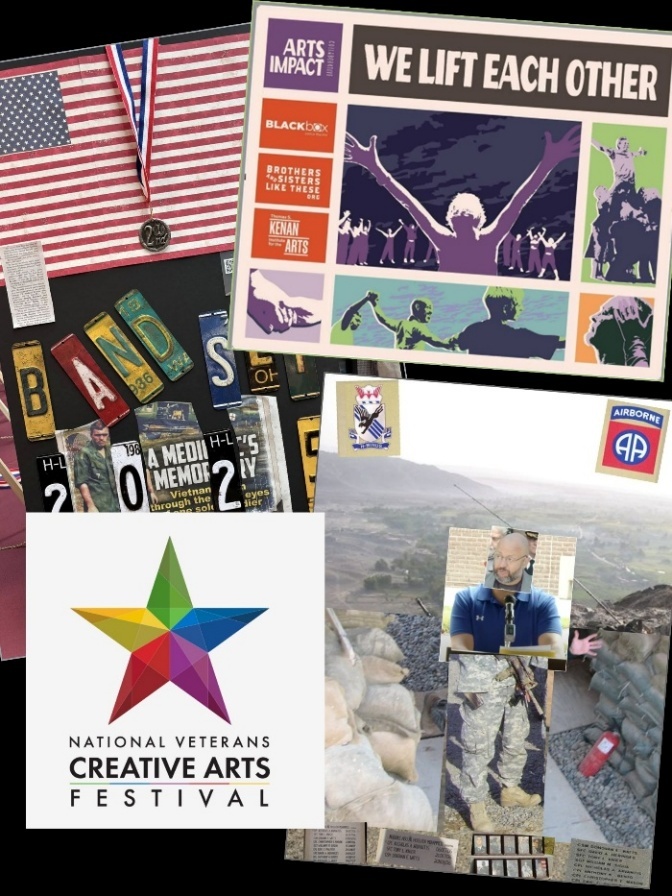
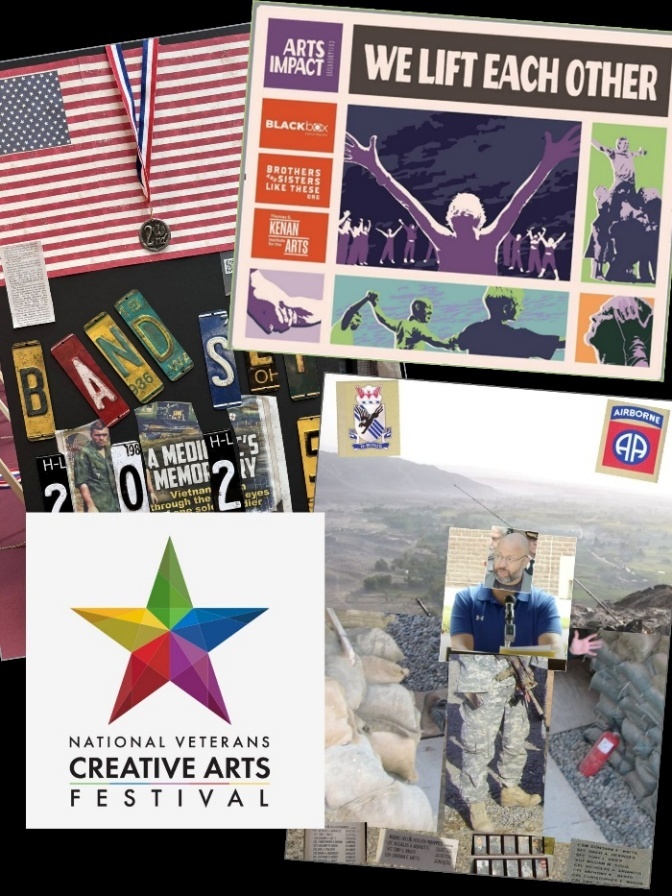
To help our Veterans experience an increased therapeutic level of emotional healing, B&SLT has been closely involved in complementing our writing with the arts. Song, dance, painting, and sculpture are some of the ways we collaborate with other nonprofits (Appendix B shows images of engagement with different artistic initiatives). We work with a yoga instructor once a week in “Moving to Heal,” which is tailored to match the physical limitations that some of our B&SLT members have. These classes help prepare many of our B&SLT members for formal performances with professional dancers. Think of how powerful it is to see a female Veteran describe her attempts to avoid military sexual trauma, while dancers bring to life the physical location of her environment, as well as expressively communicate the experienced mental anguish. That emotional growth is not only witnessed during the performance, but in every practice that the group shares for days and weeks before the event. Once again, these experiences allow our B&SLT members to explore their emotional boundaries in a productive and beneficial manner.
Conclusions
In conclusion, B&SLT has become a leading advocate for topics and issues related to Western North Carolina Veterans. Having Veterans become members of B&SLT starts them on a proven track record towards healing (internal B&SLT communications, pre- and post- class session reviews, 2020–2025) and often leads to other discussions regarding general medical care and life choices. Our constant community outreach has made us subject matter experts about the available resources in Western North Carolina and at the state and federal level. We enjoy a close working relationship with the Asheville VA Hospital and with many other nonprofits across Western North Carolina, which all serve to be force multipliers for addressing and improving the well-being of our Veteran population.
Acknowledgments
The author thanks the founding members of Brothers and Sisters Like These for creating this nonprofit, as well as the original facilitators: Dr. Bruce Kelly, MD and 2012–2014 North Carolina Poet Laureat Professor Joseph Bathanti for recognizing the treatment gap that Veterans are facing and bridging that gap for the benefit of our fellow Veterans.
Financial support
The author declares none.
Conflict of Interest
The author declares none.
Correspondence
Address correspondence to Emiliano Enea, B&SLT, P.O. Box 18113, Asheville, NC 28814 (bandslt005@gmail.com).