
Introduction
Although vaccines are one of the most effective tools for preventing infectious diseases, immunization rates have declined nationally since the early 2000s.1 In 2019, the World Health Organization (WHO) identified vaccine hesitancy as one of the top ten global health threats, and in 2020, noted “earning public trust” around vaccines as a top challenge for the coming decade.2,3 The WHO Strategic Advisory Group of Experts on Immunization (SAGE) defines vaccine hesitancy as “a delay or refusal of readily available vaccines” and names three salient domains: complacency, convenience, and confidence.4 It recommends that communities investigate these factors locally. We modeled our survey accordingly.
National studies show that perceived safety and efficacy are key determinants of willingness to receive vaccines among adults.5 Adult COVID-19 vaccine hesitancy reflects patterns distinct from pediatric vaccine decision-making; parental choices about children’s immunizations involve different considerations and are not directly transferable to adult COVID-19 contexts.1
Rurality has been shown to be a factor in vaccine hesitancy. In January 2019, a rapid national assessment estimated that 22% of US adults and 29% of rural residents were vaccine hesitant.6 A 2020 study in rural North Carolina, conducted before vaccine release, estimated vaccine hesitancy at 68.9% among minority and low socioeconomic populations in underserved communities.7 After vaccines were widely available, uptake among rural Americans in the South lagged compared to suburban and urban areas.8 Limited access to health care providers (convenience) has been associated with reduced vaccine uptake, and rural communities have shown persistently lower vaccination rates than urban areas even when hesitancy rates converge, suggesting access remains a structural constraint.9–13
Race and ethnic identity have been associated with vaccine hesitancy, but findings differ across national surveys and between rural and urban settings.6,9,14–18 Age and education may be predictive of vaccine hesitancy. Centers for Disease Control and Prevention (CDC) data show that COVID-19 vaccination coverage remains highest among older adults and lower among younger adults, consistent with national age gradients in uptake.19 Older age and higher educational attainment are consistently associated with greater vaccine willingness,9,14,16,20–25 though at least one national survey found that the “least reachable” hesitant group was both rural and older.23 National surveys documented declining COVID-19 vaccine hesitancy over the rollout period, but geographically patterned hesitancy persisted—particularly in rural areas—and detailed time-trend data for rural North Carolina remain limited.14,26–29
Understanding where populations seek health information may inform responses to hesitancy. Vaccine-hesitant individuals tend to report lower trust in institutional sources, while rural communities show higher relative reliance on friends and family; nonetheless, doctors and pharmacists remain the most trusted source in both rural and urban cohorts.11,30
Existing North Carolina work documented high pre–rollout COVID-19 vaccine hesitancy in underserved communities but did not examine post–rollout rural populations using the WHO SAGE domains or account for family members’ COVID-19 illness experiences. To address this gap, we assessed modifiable (confidence-related attitudes, trusted information sources) and non-modifiable (age, education, health care worker status) determinants of COVID-19 vaccine hesitancy among adults in rural, underserved North Carolina counties; examined participants’ COVID-19 illness experiences for themselves and family members; and identified trusted health information sources and preferred resources for learning about COVID-19 vaccines.
Methods
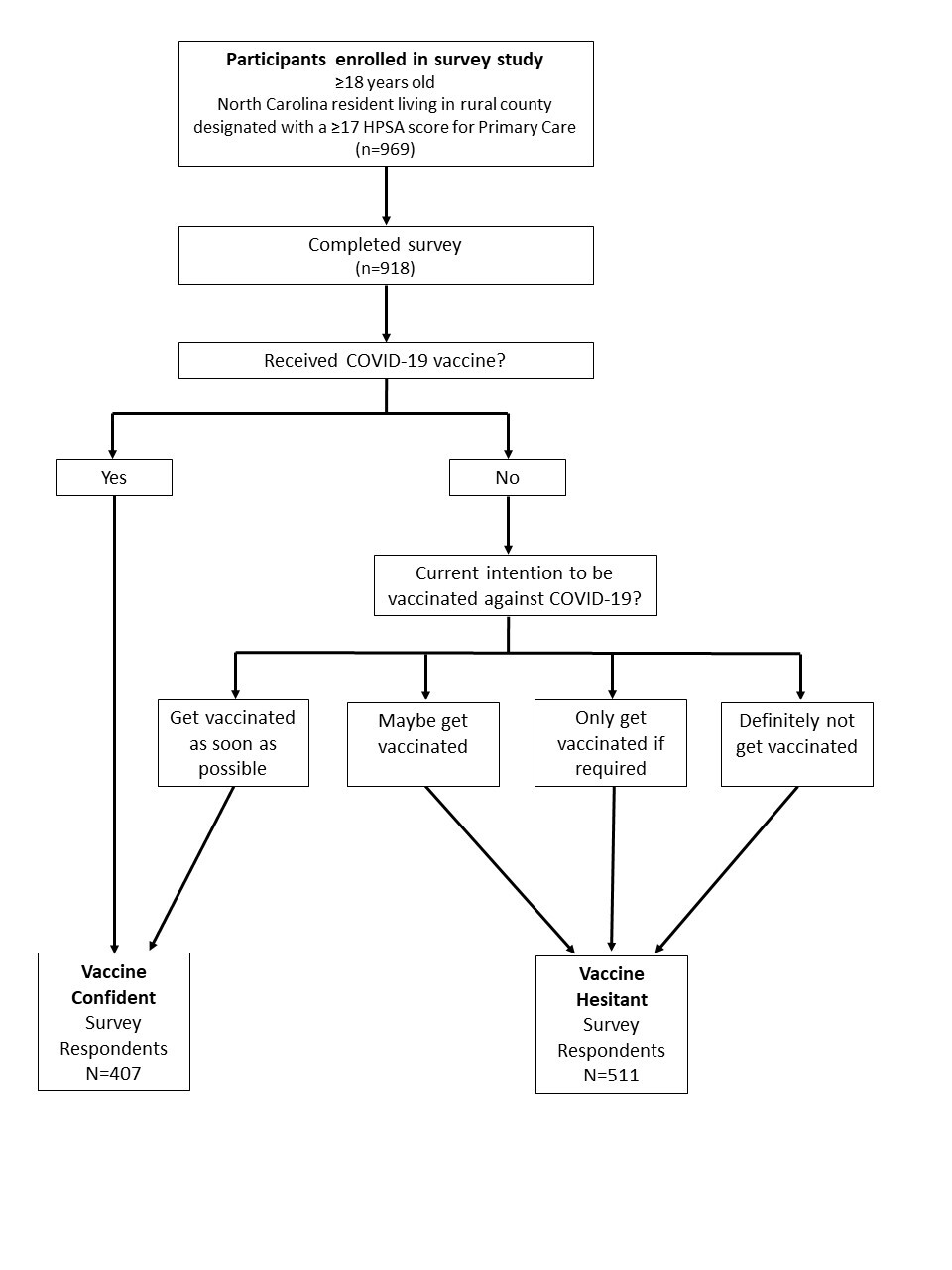
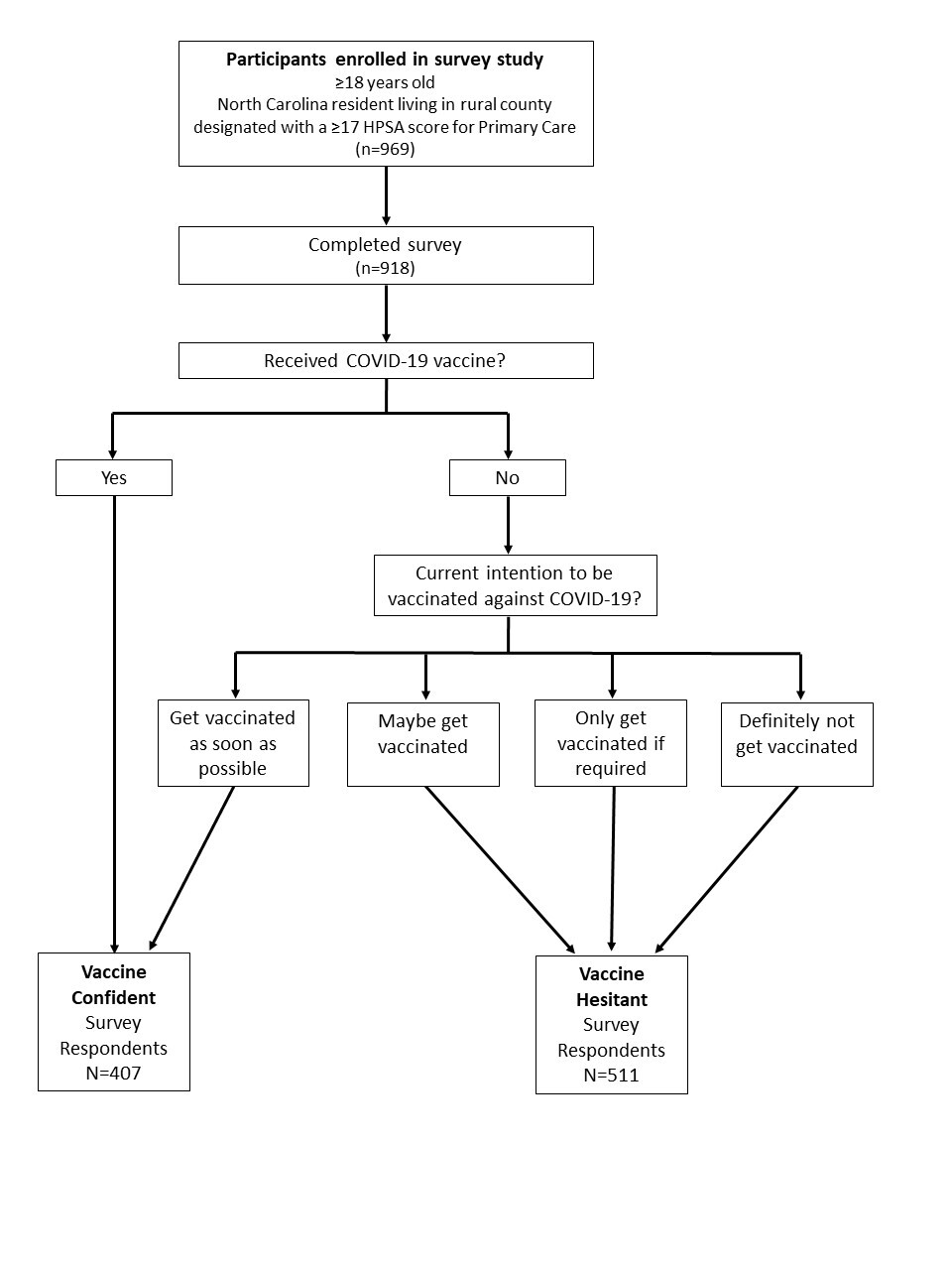
Data were collected from June through August 2021, after emergency use authorization for both single- and two-dose COVID-19 vaccines and following general adult eligibility in North Carolina. Eligible participants were adults aged ≥ 18 years, English-speaking, and residents of one of 40 rural North Carolina counties designated as primary care Health Professional Shortage Areas (HPSA) with scores of 17–26, identified using data.HRSA.gov (accessed February 2021). The survey was refined through cognitive testing with volunteer respondents before full fielding. Of 969 participants, 918 completed the survey. Those who had not received at least one dose of any COVID-19 vaccine and did not intend to be vaccinated immediately were designated as vaccine-hesitant respondents. Vaccine-willing respondents had received at least one dose or planned to vaccinate as soon as possible (Figure 1). This study was reviewed and approved by the Campbell University Institutional Review Board (protocol #686). Informed consent was obtained electronically.
Participants were recruited using non-probability convenience sampling coordinated by Qualtrics, which drew from existing online research panels of North Carolina residents meeting eligibility criteria. Because the survey was electronic-only with no paper alternative, this recruitment mode likely overrepresents digitally connected residents—a limitation addressed below. Qualtrics panel members were compensated according to the vendor’s standard incentive structure. We restricted participation to North Carolina IP addresses and excluded cases with implausibly fast completion times or straight-line response patterns, reducing the likelihood of fraudulent entries.
Non-modifiable predictors included age, gender, race/ethnicity, education, geographic region, and health care worker status. Modifiable factors included domain scores for confidence, complacency, and convenience, and trust in information sources. Family COVID-19 illness experience was treated as a contextual, situational variable. Participants reported the severity of their own illness (if any) and that of any immediate family member. Illness severity was categorized as mild (no provider contact), moderate (limited usual activities and/or outpatient evaluation), or severe (emergency care or hospitalization).
A multivariable logistic regression with vaccine attitude (willing/hesitant) as an outcome was run. Predictors included educational level (6 categories), racial identification (4 levels), age (4 levels), geographical region (3 levels), household size (3 levels), health care worker status (binary), gender (binary), and ethnicity (binary). Variance inflation factors and correlation matrices confirmed no problematic collinearity; all prespecified predictors were retained. Bivariate comparisons used chi-square tests and independent samples t-tests. Data were analyzed using IBM Statistics SPSS 26.
The survey included 3 to 5 items on a 5-point Likert scale per WHO SAGE domain, yielding raw scores of 0–12 (convenience), 0–16 (complacency), and 0–20 (confidence). Convenience and complacency scores were rescaled to the 0–20 confidence range (multiplied by 1.67 and 1.25, respectively). Two non-compulsory free-response questions asked hesitant participants about their greatest vaccine concern and what would increase their comfort with vaccination; responses were thematically coded into 6 and 8 categories, respectively (see results).
Results
Characterization of Survey Respondents and Demographic Factors Associated with Vaccine Hesitancy
Of 969 respondents who initiated the survey, 918 completed all core items and were included for analysis (Figure 1). Overall, 511 respondents (55.7%) were classified as vaccine hesitant (no prior COVID-19 vaccine and no intention to be vaccinated), and 407 (44.3%) were classified as vaccine willing (had received at least one dose or planned to be vaccinated soon). Most survey respondents were 18–49 years old (74%), identified as female (73%), non-Hispanic (93%), White (71%), did not have a college degree (62%), and did not work in health care (85%) (Table 1). In bivariate comparisons, the proportion classified as vaccine hesitant was higher among younger adults, respondents with lower educational attainment, and those not working in health care, whereas crude differences by gender, race, ethnicity, and household size were smaller and not statistically significant (Table 1).
In the multivariable logistic regression, respondents aged 18–29 years were more than 5 times as likely to be vaccine hesitant as those aged ≥ 65 years (adjusted odds ratio [aOR] = 5.62; 95% confidence interval [CI], 3.17–9.96; P < .001); and more than twice as likely as those aged 50–64 years (aOR = 2.47; 95% CI, 1.59–3.83; P < .001) (Table 1). Respondents with only some high school education were 2.79 times more likely to be hesitant than those with advanced degrees (master’s, professional, or doctoral) (CI, 1.27–6.10; P = .01). Those who did not identify as health care workers were almost twice more likely to be vaccine hesitant than those who did (aOR = 1.91; CI, 1.24–2.94; P = .003) (Table 1). We did not find a statistically significant difference in vaccine hesitancy for gender, ethnicity, race, or household size (Table 1).
Out of the respondents, 117 (12.7%) reported testing positive for COVID-19, while 314 (34.2%) reported having an immediate family member test positive for COVID-19 categorized by mild (51.3%), moderate (31.5%), or severe/hospitalization (17.2%) disease. There was no statistically significant association between respondents’ own history of COVID-19 illness and vaccine willingness in either bivariate or adjusted analyses (data not shown). By contrast, having an immediate family member experience more severe COVID-19 illness was associated with being vaccine willing. Compared with respondents whose immediate family members had only mild symptoms, those reporting a family member with moderate symptoms who did not receive care from a health care provider had 6-fold higher odds of being vaccine willing (aOR = 6.04; 95% CI, 2.00–18.21; P = .001), and those reporting a family member with moderate to severe symptoms who did receive care from a health care provider or were hospitalized had nearly 4-fold higher odds of being vaccine willing (aOR = 3.91; 95% CI, 1.37–11.17; P = .011).
Attitudes Toward COVID-19 Vaccination: Factors of Complacency, Confidence, and Convenience
The hesitant group more strongly agreed with statements that showed concern for “confidence” (e.g., safety and efficacy) in the vaccines (P < .001) but agreed less with statements regarding concern for the “convenience” of receiving them (P < .001) (Table 2). When asked to rate statements related to the benefits and necessity of vaccination, vaccine-hesitant respondents agreed more strongly with statements regarding complacency for vaccination (P = .036) (Table 2). As described in Methods, raw scores were rescaled to a common 0–20 metric (higher scores = greater concern), with convenience multiplied by 1.67 and complacency by 1.25. On this normalized scale, confidence-related safety concerns were the dominant domain for the hesitant group (13.0 versus 10.0 for convenience and 10.1 for complacency), while convenience was the greatest concern for the willing group (11.7 versus 9.6 for complacency and 9.7 for confidence) (Table 2).
Among participants who would “definitely not” or “probably not” vaccinate, the most selected reasons were: “I am concerned about the safety of the vaccine” (n = 206 / 321; 64%); “I question how well the vaccine works” (n = 129 / 321; 40%); “I do not trust the source that encouraged me to get the vaccine” (n = 66 / 321; 17%); and “Getting sick with COVID-19 does not worry me” (n = 51 / 321; 16%). Less popular selections included “A source that I trust encouraged me to not get the vaccine” (n = 33 / 321; 10%); “I do not have health insurance” (n = 32 / 321; 10%); “It is not worth the time or effort to get vaccinated,” (n = 19 / 321; 6%); and “It is difficult to access a health care provider or facility” (n = 7 / 321; 2%).
Preferred Resources for Health-Related Information
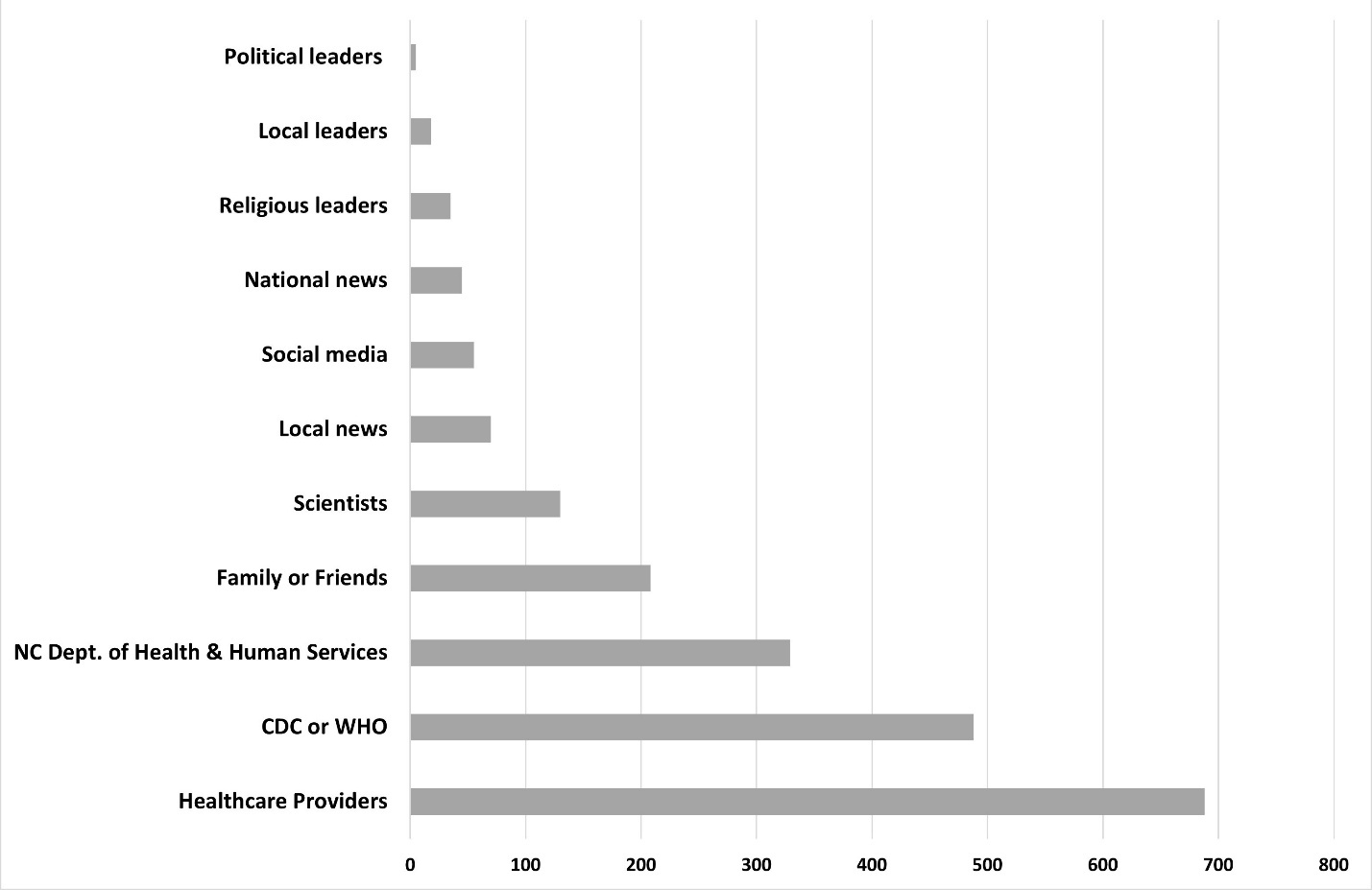
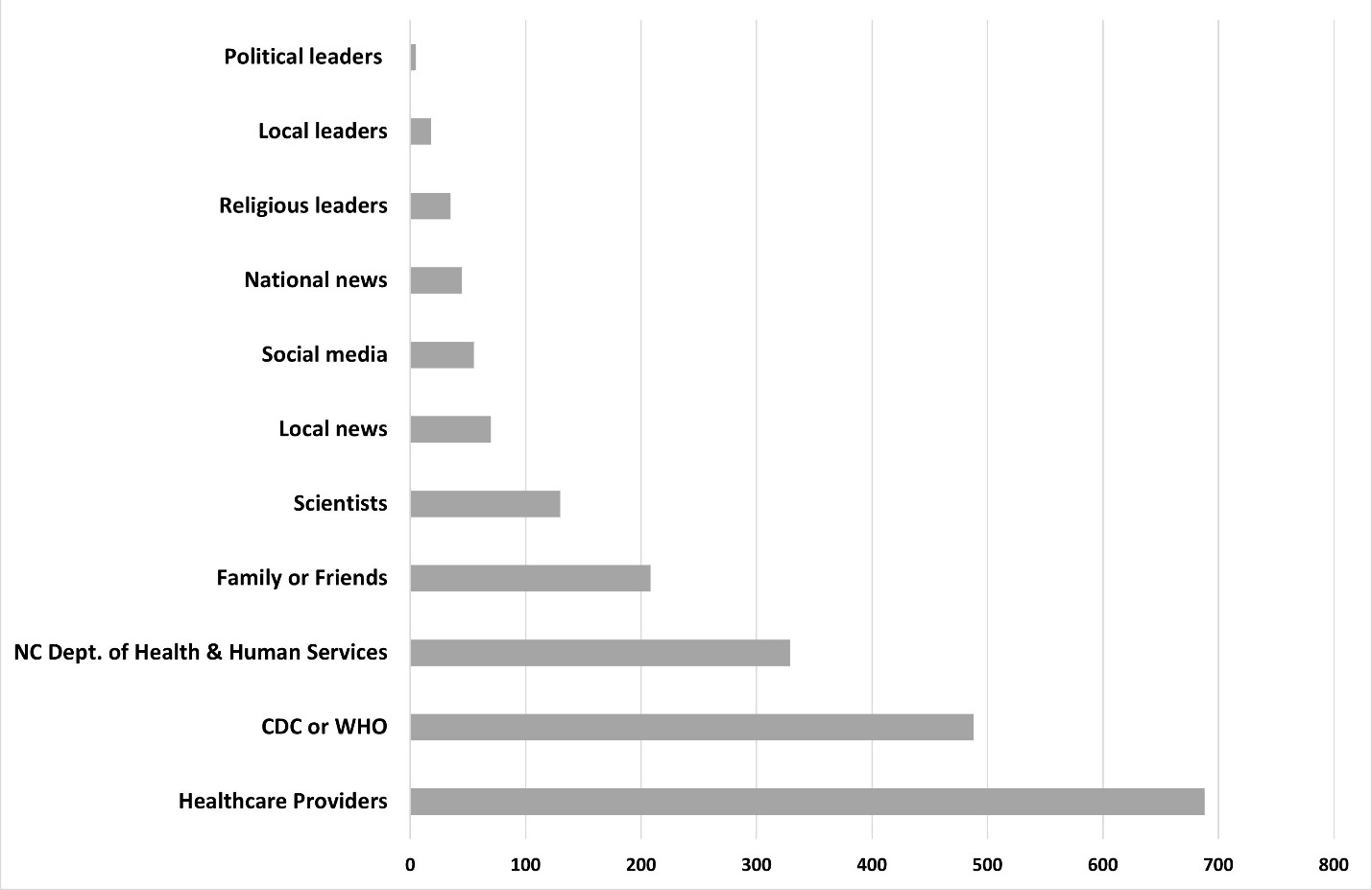
The most popular selections for both willing and hesitant participants were “Doctors, pharmacists, and other health care providers,” “Centers for Disease Control and Prevention and WHO,” and “the North Carolina Department of Health and Human Services” (Figure 2). A higher proportion of vaccine-willing respondents endorsed these institutional sources, whereas hesitant respondents were somewhat more likely to report relying on friends, family, or social media; overall, however, the rank ordering was similar between groups. Among hesitant respondents asked which resources they would use to learn more about COVID-19 vaccines, the most frequent response was “I am not interested in learning more about the vaccines” (n = 189 / 511; 37%). This was followed by “Discussing with a pharmacist or health care provider,” (n = 186 / 511; 36%), and “Reading materials such as a pamphlet about the vaccines” (n = 132 / 511; 26%).
Free Responses to “Biggest Concerns” and “What Would Make You More Comfortable with” COVID-19 Vaccines
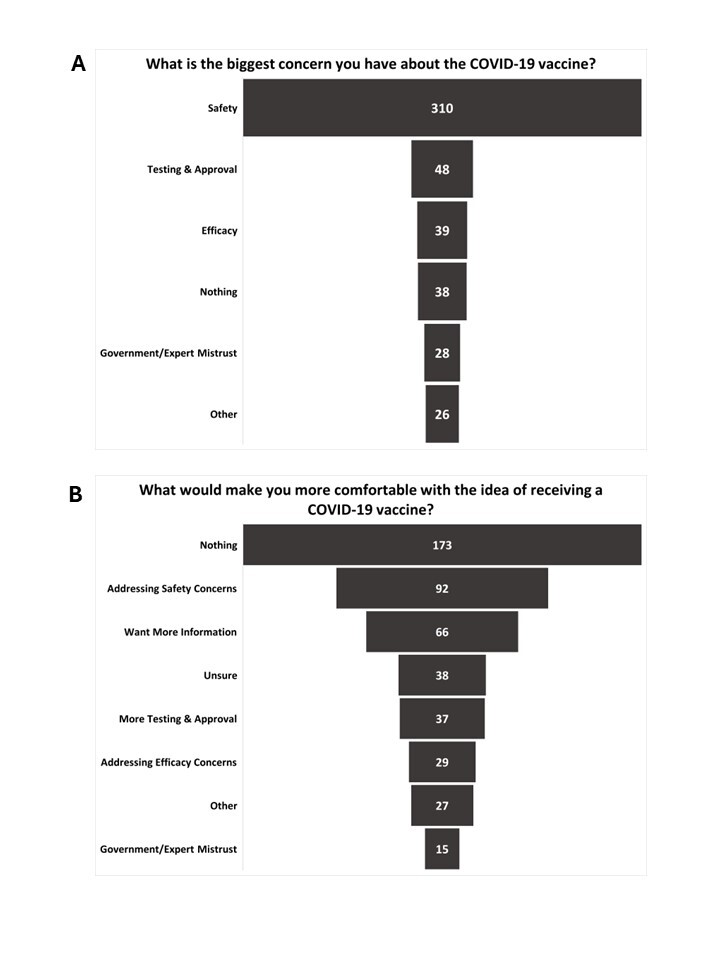
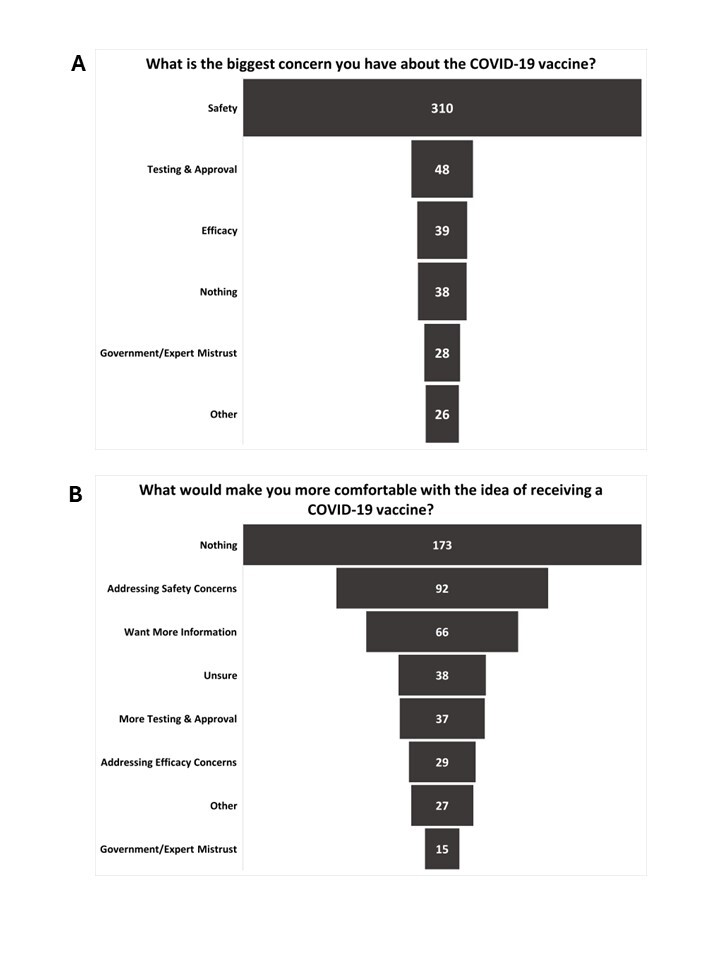
Vaccine-hesitant responders gave free responses to two non-compulsory questions: “What is the biggest concern you have about the COVID-19 vaccine?” and “What would make you more comfortable with the idea of receiving a COVID-19 vaccine?” (Figure 3). Safety was the most frequently reported concern (63%), outnumbering all other categories combined; nearly 10% of those responses specifically cited fear of death from the vaccine (Figure 3A).
When asked what would make them feel more comfortable about receiving a COVID-19 vaccine, hesitant respondents indicated “nothing” (the most frequent response) would make them more comfortable with receiving a COVID-19 vaccine (36%); this was followed by “addressing safety concerns” (19%) and “wanting more vaccine-specific information” (14%) (Figure 3B). Sixty-six hesitant respondents indicated wanting more information or data about the vaccines; for example, someone stated, “More research and data to really make sure that the effects of the vaccines will not have devastating effects.”
Discussion
In this study, factors associated with vaccine hesitance among participants living in rural, medically underserved counties of North Carolina included non-modifiable characteristics such as younger age (particularly ages 18–29), lower educational attainment, and not identifying as a health care worker, alongside modifiable attitudinal and behavioral factors, including confidence-related safety and efficacy concerns, complacency about the need for vaccination, and patterns of trust in information sources. These findings align with prior literature on age and education,13,14,16,20,22,24,25 though we did not see a statistically significant association with race, ethnicity, gender, or size of household, suggesting demographic associations may vary by region.6,7,9,14–17,31,32 We observed increased willingness to vaccinate among those with a family member who had suffered moderate to severe COVID-19, whereas one’s own experience with moderate to severe disease had no detectable impact on vaccine willingness, suggesting that concern for protecting family members may be a particularly salient motivator in these communities.
Distinguishing non-modifiable demographic factors from modifiable attitudes and trust patterns helps clarify where interventions can be most effective. For younger adults, those with less formal education, and non-health care workers in these rural HPSA counties, trust-building strategies that leverage highly trusted messengers—especially physicians, pharmacists, and other local health care professionals—are likely to be more impactful than broad, generic messaging. Our findings further suggest that targeted communication should directly address safety and efficacy concerns, emphasize the benefits of vaccination for protecting family members and vulnerable others, and be delivered in simplified, visual, low-literacy formats through channels that younger rural adults actually use, including social media or other platform-specific campaigns.
Confidence-related concerns dominated among hesitant respondents, consistent with findings from rural, underserved Black Appalachian communities.18 Participants expressed the lowest concern with issues centered around convenience. Access barriers, though linked to hesitancy in prior studies,12,13 were infrequently cited here, likely because our electronic-only survey overrepresents those with existing health system and digital access. Confidence-building interventions may thus yield greater returns in this population, even as access improvements remain critical for those not reached.
When hesitant participants were asked what would make them more comfortable with the COVID-19 vaccines, over a third wrote that “nothing” would make them change their stance. The majority indicated disinterest in learning more, suggesting that educational materials on their own may have limited benefit for a substantial subset of people within rural, underserved, hesitant populations.
The stronger association between family member illness and vaccine willingness, compared with respondents’ own illness experiences, aligns with work highlighting altruistic or prosocial motives in vaccination decisions, including desires to protect family members, high-risk loved ones, and the broader community.33–35 In rural, medically underserved communities, witnessing severe illness in an immediate family member may crystallize prosocial motives more powerfully than personal illness, indicating that “protecting your family” framing may resonate especially well with hesitant but moveable subgroups.
Health care professionals were the most trusted source for all participants, yet all resided in HPSA-designated counties with limited primary care access, constraining access to precisely the messengers they trust most, which may partly explain persistent uptake gaps.10–13 More research is needed to determine whether quality improvement projects that leverage medical professionals at clinics and pharmacies can meaningfully improve uptake of vaccines among these communities.
While hesitancy generally declined as safety and effectiveness data accumulated,14,26–29 persistent pockets remained among younger adults, those with lower education, and non-health care workers. Our survey reflects an early post-rollout snapshot (summer 2021) rather than later phases; future longitudinal work in rural and underserved areas is needed to track whether the remaining hesitant segment differs meaningfully from those who were initially hesitant but ultimately chose vaccination.
This study’s electronic-only format required internet access and digital literacy, likely underrepresenting residents with limited connectivity. The non-probability convenience sample cannot be considered representative of all HPSA-county residents, and despite IP-address restrictions and data quality checks, some fraudulent or duplicate responses may have gone undetected. All measures were self-reported, and the cross-sectional design precludes causal inference. Survey timing—after the first major vaccination wave in summer 2021—limits generalizability to later pandemic phases, booster campaigns, or future pathogens.
Conclusion
Vaccine hesitancy in rural, medically underserved North Carolina is shaped by non-modifiable determinants (younger age, lower educational attainment, non-health care worker status) that identify higher-risk groups, and by modifiable factors (confidence-related safety and efficacy concerns and trust in health information sources) that represent targets for intervention. Confidence and safety concerns dominated, convenience played a lesser role, and trust in providers remained high even among the hesitant. These patterns suggest that provider-led, trust-building outreach that directly addresses safety and efficacy, leverages existing community relationships, and is coordinated with health departments, clinics, pharmacies, and community organizations may be more effective than generic mass messaging. Applying these insights to future booster campaigns and emerging infectious disease threats could help HPSA-designated communities anticipate and mitigate hesitancy more rapidly and equitably.
Acknowledgments
The authors gratefully acknowledge the financial support provided through Jerry M. Wallace Campbell University School of Osteopathic Medicine (CUSOM) and the CUSOM Medical Student Summer Research Scholars Program. The authors recognize the contributions of Arielle Khosrowpour and Meghan Nunnally who assisted with data extraction and organization.
Declaration of Interests
The authors declare that they have no conflicts of interest.
Correspondence
Address correspondence to Amy N. Hinkelman, PhD, Department of Microbiology and Immunology, Jerry M. Wallace School of Osteopathic Medicine, Campbell University, P.O. Box 4280, Buies Creek, NC 27506 (hinkelman@campbell.edu).