Introduction
Rural and underserved communities across the United States often grapple with significant gaps in health care access. Physician maldistribution contributes to these gaps and subsequent health outcome disparities.1 Rural graduate medical education (GME) is an effective strategy to address rural physician shortages.2 Exposure to rural and community health center (CHC) settings during residency enhances physicians’ preparedness for rural or underserved practice and increases retention in these communities.2–4 Family physicians who train in CHCs are more likely to prescribe treatment for opioid use disorder and offer behavioral services compared to physicians not trained in those environments.4 Surgeons who complete residency in rural settings are more likely to practice in rural areas and are more equipped to maintain a broader scope of practice, such as performing Caesarean sections, a needed service for rural communities.5
Evidence from technical assistance provided to over 200 developing rural and underserved residencies across 10 specialties in 45 states suggests that residency training programs produce downstream benefits.6 Examples include health care professional recruitment, lower spending on physician recruitment, reduced wait times to first appointment in primary care clinics, shorter emergency department wait times, service line expansion such as reopening labor and delivery units, enhanced treatment for chronic conditions such as diabetes, and improved access to preventive care.6 These spillover effects can increase infrastructure for the expansion of additional workforce training, interprofessional education, and economic development for rural communities.4,6 Despite the clear return on investment of rural GME, most residency training is concentrated in urban academic medical centers across the nation.7
North Carolina Has Substantial Untapped Capacity for Rural Training
North Carolina has the second largest rural population in the country with 30% of the state living in rural areas.8 Moreover, more than 90% of its counties are federally designated as primary care, mental health, and dental health professional shortage areas, highlighting pervasive barriers in access to care.9 Data from the Program on Health Workforce Research and Policy based at the University of North Carolina Cecil G. Sheps Center for Health Services Research (Sheps Center) further illustrate these gaps: 31 counties have no general psychiatrist, 27 have no obstetrician/gynecologist, 25 have no general surgeon, and 19 have no pediatrician.10
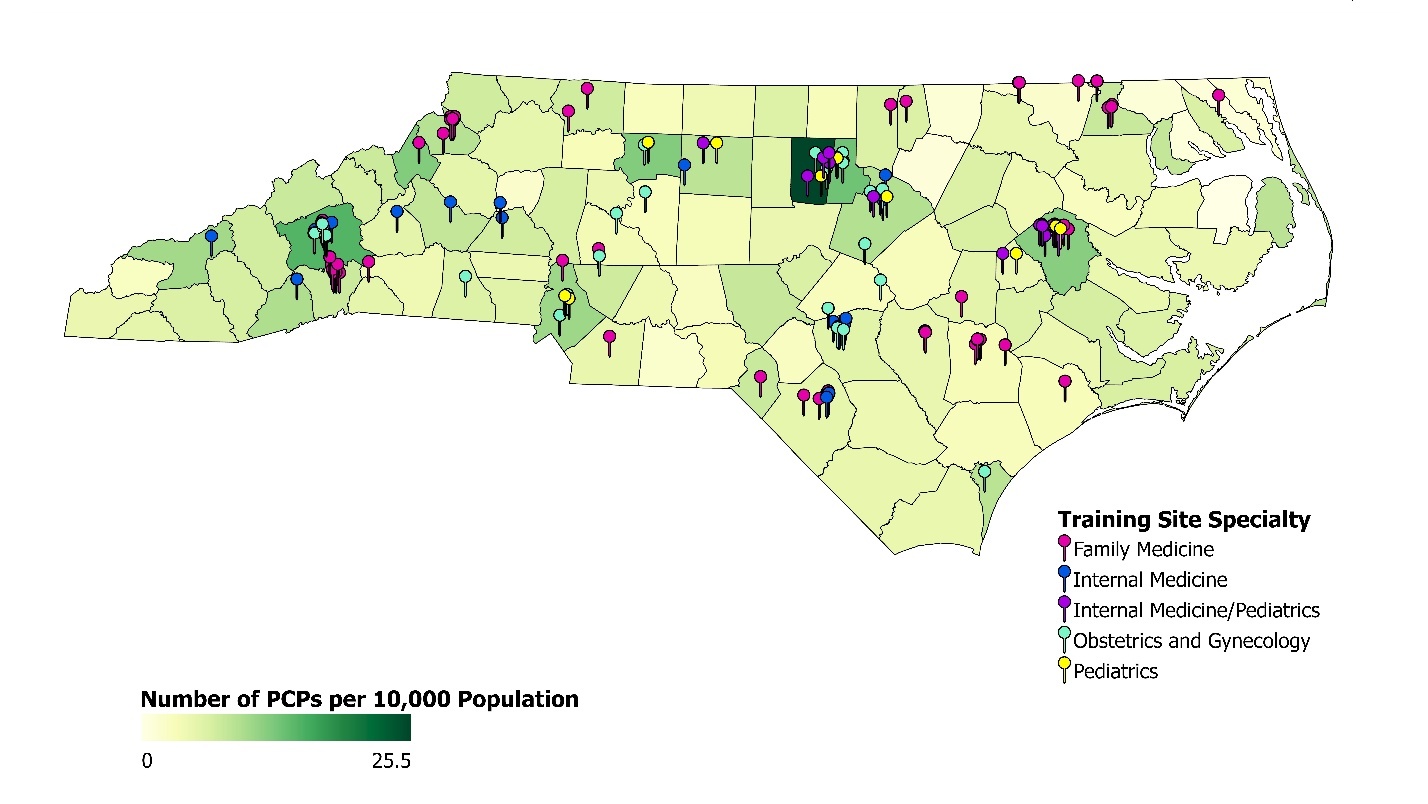
Because residency training is required for physician licensure and independent practice, expanding GME in rural communities represents a key strategy to strengthen access to care in North Carolina. Given that physicians tend to practice within 100 miles of where they train, examining the distribution of training sites is an important initial step in using data to inform workforce planning.11 Figure 1 displays the distribution of training sites overlaid on physician supply by county, inclusive of internal medicine, family medicine, internal medicine/pediatrics, obstetrics and gynecology (OB/GYN), and pediatrics. Specialty-specific maps have been previously published.12
_per_10_000_population_and_residency_training_site.jpeg)
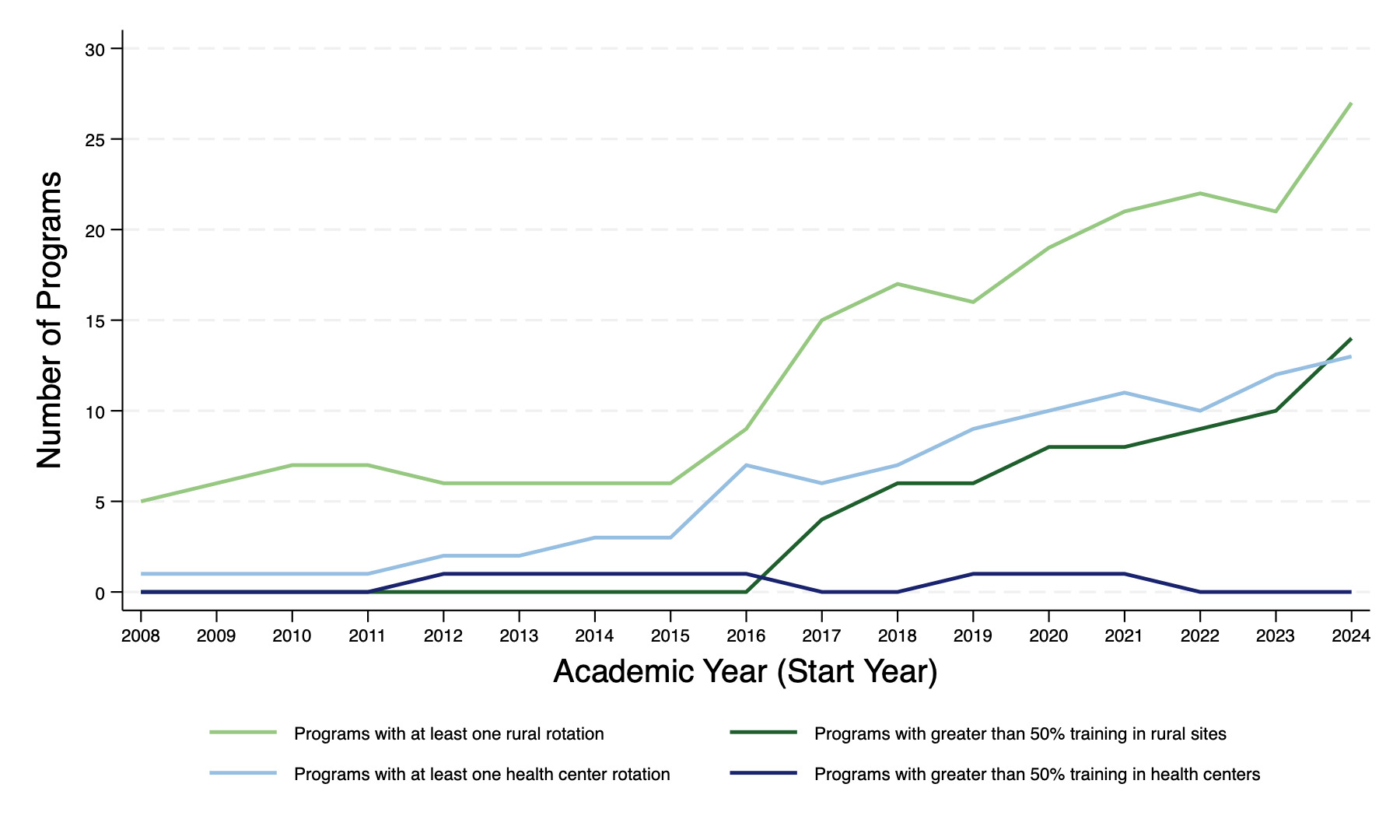
In North Carolina, approximately 4% of the accredited resident positions are rural-based positions. Of the 165 residency programs in the state, there are 12 rural residencies (8 family medicine, 4 internal medicine) training 189 residents with more than 50% of their time in rural sites. Fifteen additional programs include some rural rotations.12
North Carolina is well positioned to expand rural GME across a variety of health care settings. Eleven rural-based residencies are currently in development across general surgery, psychiatry, OB/GYN, family medicine, pediatrics, and internal medicine, with over 80 new resident positions projected. At the same time, substantial untapped training capacity remains. Our research identified over 50 rural hospitals in the state that are not yet engaged in physician training (“GME-naïve”), including 21 rural hospitals with the clinical volume and case mix needed to support general surgery rotations.13 Additional hospitals and rural health facilities have capacity to enhance rural training across different specialties. Of the 145 prime “GME-naïve” rural hospitals across the country that have the financial characteristics (e.g., net patient revenue) that align with existing teaching hospitals and could supporting strong residency training, 12 are in North Carolina.14 Out of 445 sites that are Federally Qualified Health Centers or look-alike clinics in North Carolina, only 14 are engaged in GME.13
With continued federal programs and increased state-based workforce initiatives, as described below, North Carolina could see an unprecedented expansion of rural GME over the next decade, building on early successes.
North Carolina Has Already Demonstrated Success
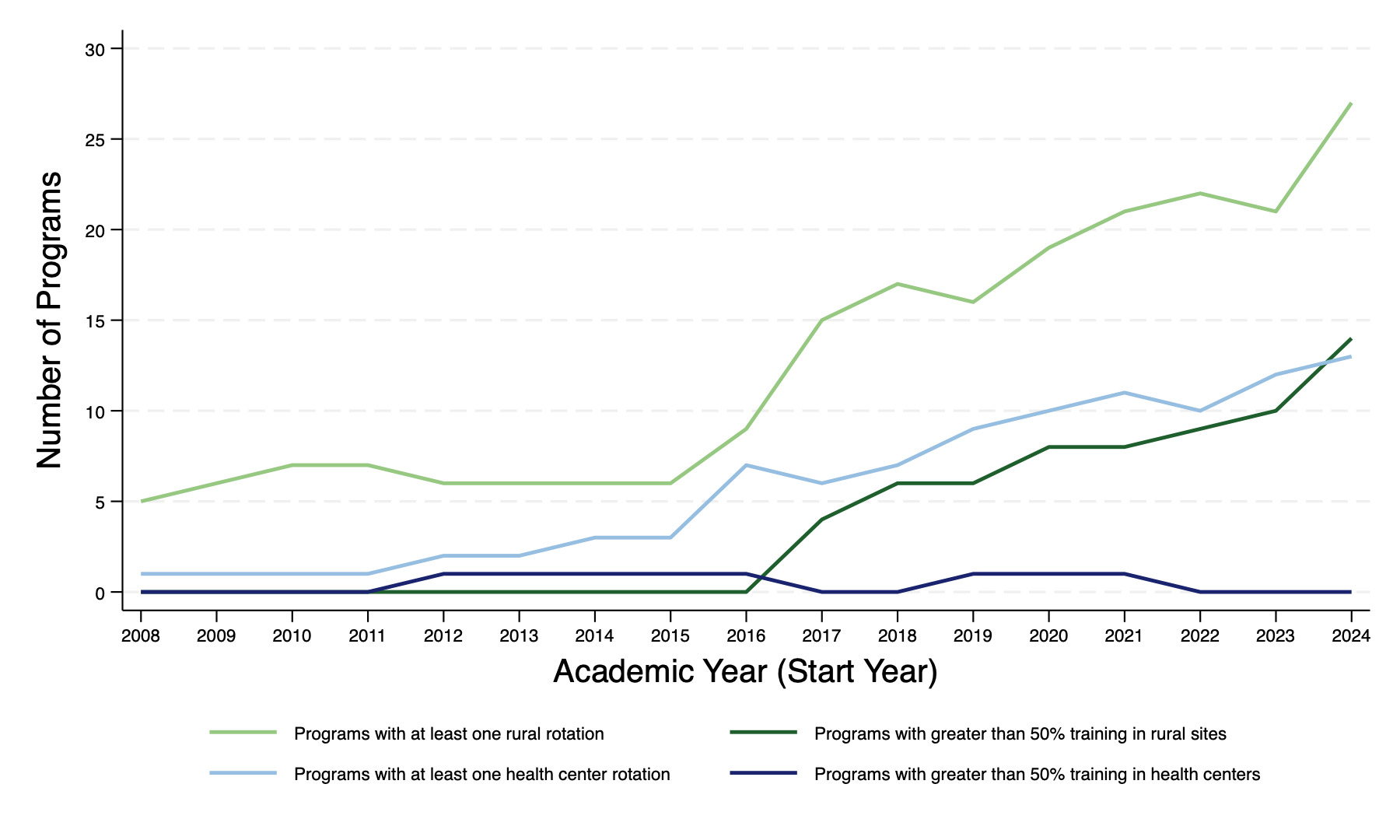
As fewer North Carolina medical school and residency graduates choose to practice in rural communities, health care leaders, rural champions, and policymakers have increasingly recognized the need to expand rural GME.15 In response, community-based organizations and rural health facilities across the state have pursued funding, partnerships, and technical support to develop new training opportunities in rural and CHC settings. These efforts have contributed to steady growth in rural training opportunities (Figure 2). Since 2008, the number of rural rotations has increased from 5 to 27; CHC rotations grew from 1 to 13.
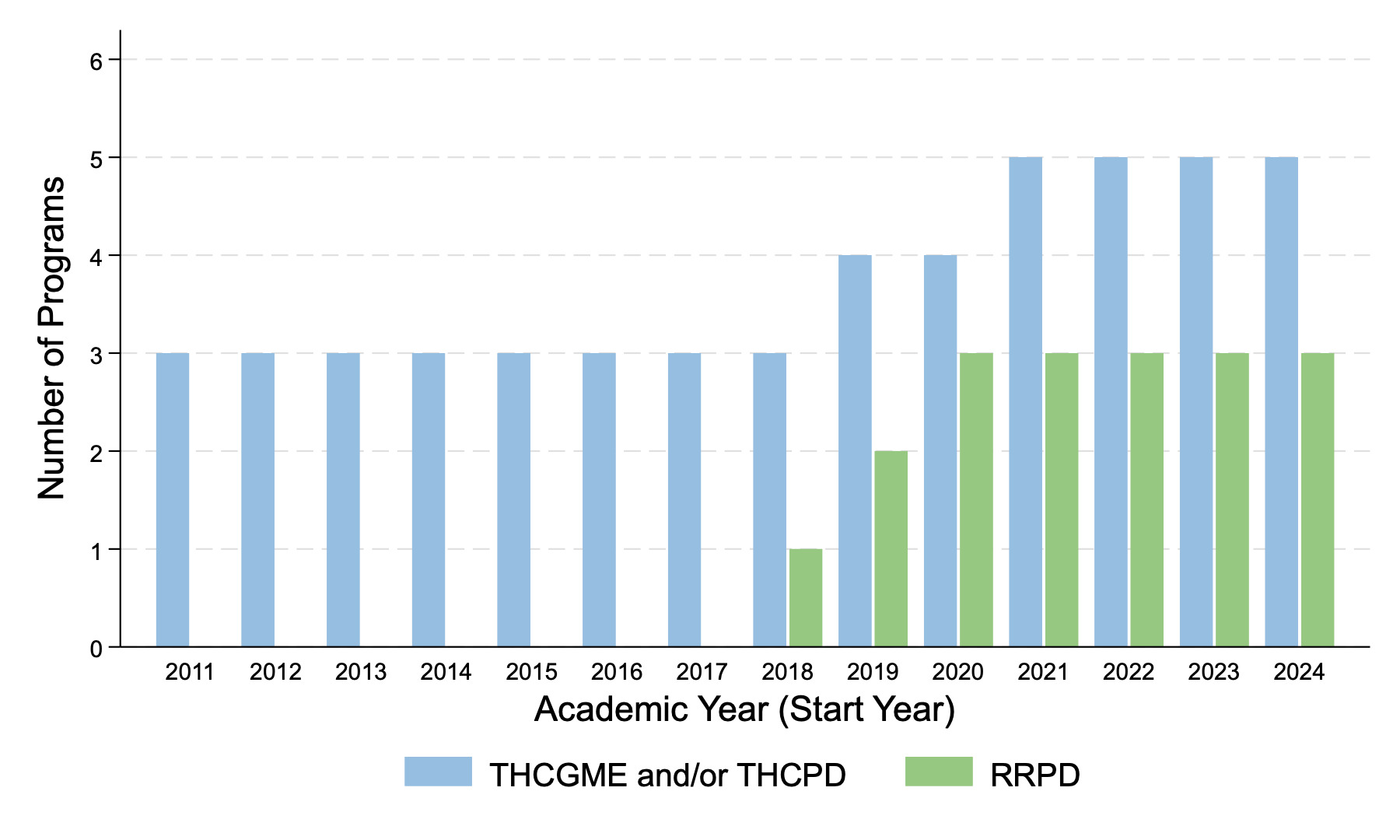
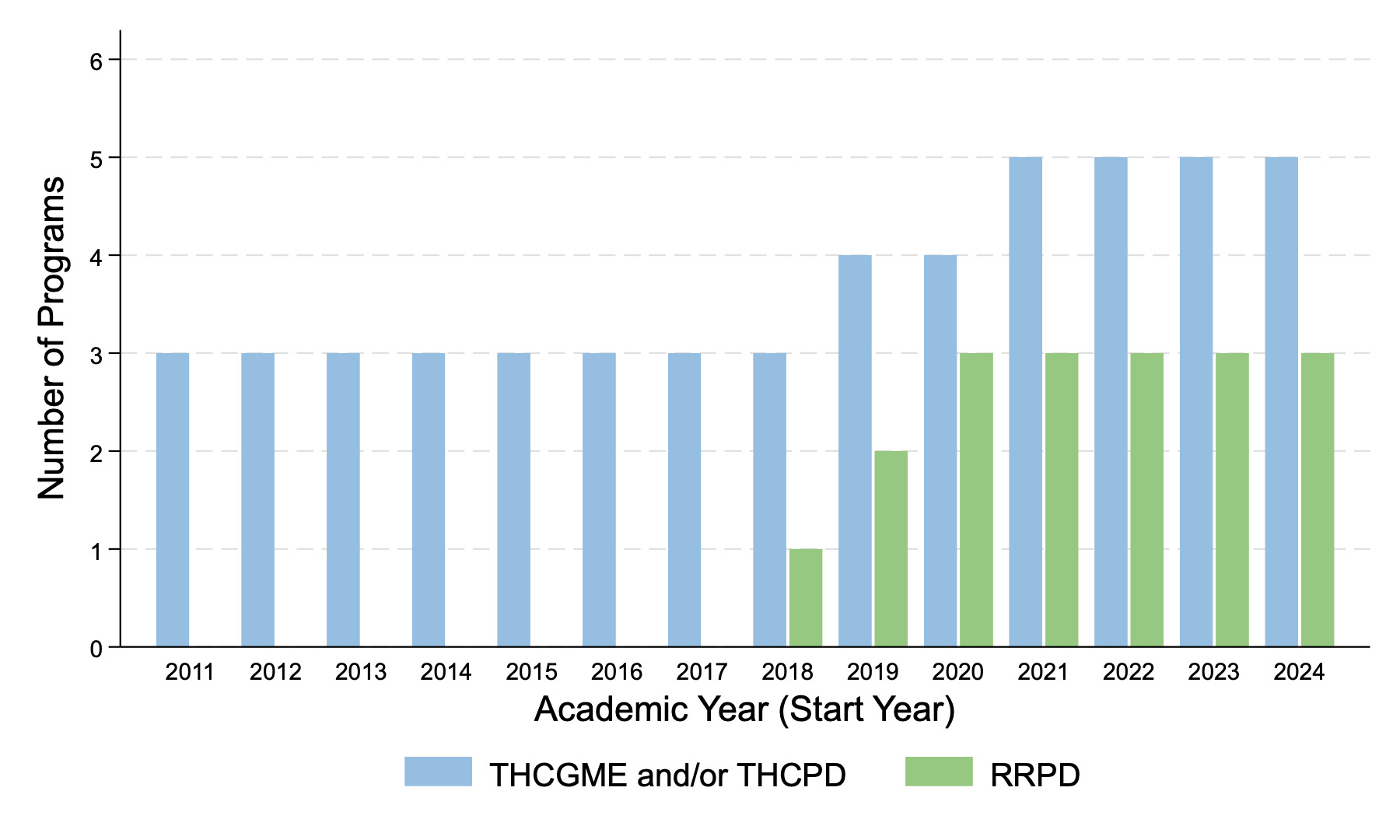
Federal investments in both start-up (via the Rural Residency Planning and Development [RRPD] and Teaching Health Center Planning and Development [THCPD] programs) as well as sustainability funding (through Teaching Health Center Graduate Medical Education [THCGME]) have contributed to rural and underserved GME expansion in North Carolina (Figure 3).7
State initiatives like the University of North Carolina System Rural Residency Medical Education and Training Fund (UNC System Fund)16 and the Rural Health Transformation Program (RHTP)17 are providing funding to expand rural GME. These new investments offer an opportunity to build on lessons learned in the state and nationally about how to best launch and sustain rural GME.
Launching and Sustaining Rural GME Requires Resources
Compared to urban hospitals, many rural health facilities face unique challenges—thin financial margins, limited subspecialty opportunities, and less educational infrastructure.3,18,19 There are two distinct but equally essential funding phases when launching a residency program: start-up and sustainability funding. Each phase also requires technical assistance to ensure effective use of funding.
Start-Up Funding Catalyzes Program Creation
The cost of establishing a new residency program ranges from $500,000 to $2,000,000 depending on specialty, training model, geographic region, and organizational structure.11,13,20,21 Start-up funding typically includes one-time-only costs for accreditation, curriculum design, partnership agreements, financial planning, faculty recruitment, faculty development, and resident recruitment. Because Medicare, the primary funder of GME, does not support these early-stage development activities, organizations must secure alternative resources to launch new programs.
Federal programs like Health Resources and Services Administration (HRSA) RRPD and THCPD have awarded start-up grants since 2019 and 2021 to help rural health facilities and CHCs launch medical and/or dental residencies.20,21 Since 2026, state initiatives like the UNC System Fund are providing $750,000 in start-up grants to create new general surgery, psychiatry, OB/GYN, family medicine, pediatrics, and internal medicine programs.22 North Carolina’s RHTP can also play a substantial role in utilizing a one-time only funding mechanism to support the creation of new rural residencies. This start-up support is critical, but it is also necessary to ensure the program is designed to sustain on stable sources after the program launches.
Sustainable Funding Sources Are Needed to Cover Longterm Residency Operations
There are significant ongoing costs associated with training residents (e.g., resident salaries and benefits, faculty and staff costs, ongoing accreditation fees, decreased clinical revenue). The average cost to operate a residency program is $150,000–$200,000 per resident, although specific costs vary by specialty and geographic region.
These academic operations are paid through sources including Medicare, Medicaid, grants, state appropriations, hospital or health center contributions, and private sources.13,23 Medicare goes directly to hospitals to cover the direct and indirect costs of training residents.24 Hospitals that are GME-naïve or those that establish a Rural Track Program are eligible for new Medicare GME financing. A Rural Track Program occurs when residents spend greater than 50% of total training time in clinical sites physically located outside a metropolitan Core-Based Statistical Area (CBSA).
Hospital type also impacts Medicare reimbursement.22,25,26 For example, Sole Community Hospitals often play a vital role in delivering health care to rural populations and serve as strong potential residency hosts due to strong clinical volumes, patient revenue, and broad services. But compared to urban teaching hospitals, they receive approximately $70,000 less per resident.26 Although there are federal policy reforms being considered at the congressional level, careful financial planning can help ensure long-term sustainability with Medicare as the primary source.6
Medicaid GME financing varies by state and is based on methodologies incorporated into each state’s Medicaid State Plan, typically through State Plan Amendments. For example, in North Carolina, a State Plan Amendment approved in 2021 establishes a methodology based on the Medicare GME formula to reimburse for resident training costs for time spent at each hospital,27 resulting in a contribution of $308.2 million to GME in 2022.28 Federal HRSA THCGME grants support costs of residency training in CHCs which are not able to directly access adequate Medicare GME funding. In North Carolina, THCGME grants fund two family medicine residencies, one internal medicine, one OB/GYN, and one dental residency.
The UNC System Fund also includes support to expand and sustain rural residency programs. Expansion grants create new positions within existing rural residencies (e.g., programs beyond their Medicare cap-building period). Sustainability grants fund accredited rural resident positions that do not receive full GME financing and are not covered by other sources of funding (e.g., rural programs based in Sole Community Hospitals). In comparison to Medicare restrictions, the UNC System Fund offers greater flexibility by broadening rurality inclusion to the NC Rural Center definition, which includes a higher number of counties, and by lowering the rural training threshold to 30%.16
Technical Assistance Converts Opportunity Into Durable Capacity
Recognizing the importance of technical assistance in residency program development, federal programs (RRPD, THCPD, THCGME) as well as the UNC System Fund have incorporated technical assistance into their grant funding strategies. The Sheps Graduate Medical Education Technical Assistance Center (www.shepsgme.org), based at the Sheps Center, has supported many of these efforts by providing expertise and guidance to organizations developing new training programs. Building on this work, the Sheps Center is collaborating with the Centers for Medicare and Medicaid Services and HRSA as part of the Rural Health Transformation Program to launch a State GME Community of Practice supporting state officials and technical assistance center entities engaged in statewide RHTP GME work.11,29
Rural residencies require partnerships across multiple training sites that are often geographically dispersed across regions in order to gain adequate exposure to a broad mix of cases and volumes. While this creates a rich learning environment, it introduces more complexity in structure due to nuances in affiliation agreements, funding interactions, faculty recruitment, and partnerships. At both the state and federal level, technical assistance is a foundational component of effective capacity building. It provides neutral coordination that transforms interest into action, reduces inefficiencies and redundant efforts, and ensures public resources deliver measurable results. The resulting data enables evaluation, decision-making, and long-term viability.11,30
For program creation, we developed a Roadmap for Rural Residency Development and Teaching Health Center Development,3 incorporated into an Online Portal (www.ruralgme.org; www.thcgme.org) and used to guide and assess progress. Core elements of assistance include community engagement, curricular design, governance, financial planning, accreditation support, and faculty recruitment. Once programs are training residents, our vitality index supports long-term sustainability.
Expert advisors and content experts provide in-depth consultative services on common issues such as financing, curriculum design, and partnerships. Programs complete quarterly development or vitality assessments. Monthly educational sessions, peer learning networks, listservs, in-person events, and an annual meeting foster the community of practice. A regularly updated online toolbox is available to those with a login (www.ruralgme.org; www.thcgme.org; www.ncgme.org).
Conclusion
North Carolina faces persistent rural workforce shortages and significant gaps in access to care, underscoring the need for rural residency expansion. At the same time, the state is well-positioned for growth, with expanding interest from rural hospitals, CHCs, and other health care organizations, as well as substantial untapped training capacity. Rural GME is an evidence-based strategy to address rural workforce shortages. State and federal initiatives are working synergistically to grow rural and underserved GME.
Financial Support
The Rural Residency Planning and Development (RRPD) Technical Assistance Center (TAC) is supported by the Health Resources and Services Administration (HRSA) of the U.S. Department of Health and Human Services (HHS) under cooperative agreement #UK6RH32513.
Teaching Health Center Graduate Medical Education (THCGME)-TAC is supported by the HRSA of the U.S. Department of Health and Human Services (HHS) under contract #75R60224C00016.
Teaching Health Center Planning and Development (THCPD)-TAC was supported by HRSA of the U.S. Department of Health and Human Services (HHS) under cooperative agreement #U3LHP45321-01-00.
The authors have also received funding for technical assistance from the UNC System Office through funding from the state of North Carolina.
The authors have also received funding for statewide GME strategy planning from the state of Wisconsin, Arkansas, Missouri, and Utah.
The contents are those of the author(s) and do not necessarily represent the official views of or an endorsement by HRSA, HHS, the United States Government, the UNC System, or other states mentioned.
Declaration of Interests
None of the authors have conflicts of interest to report.
Correspondence
Address correspondence to Emily Hawes, 725 Martin Luther King Jr. Blvd, Chapel Hill, NC 27516 (emily_hawes@med.unc.edu).