Introduction
Watauga County, North Carolina has historically served as a regional health care hub for a geographically dispersed mountain region with inadequate access to primary care. Although Watauga ranked among the healthier counties in North Carolina, this picture masked substantial disparities. The county’s 2019 income inequality measure was 7.4, compared with 4.8 statewide; 13% of the population were uninsured, compared with 12% statewide, and 7% of children were uninsured, compared with 5% statewide. Neighboring counties faced even greater challenges. The reported ratio of patients to primary care physicians ranged from 1923:1 in Ashe County to 2919:1 in Avery County, compared with 1421:1 statewide. Adult uninsured rates and child poverty also exceeded state averages in Ashe, Avery, Caldwell, and Wilkes Counties.1
Regional Need
These regional population health needs led Appalachian Regional Healthcare to commission a community-informed market analysis in 2019.2 Interviews with 16 local physician leaders and a survey of clinicians in the region were incorporated. This analysis revealed a shortage of primary care clinicians, long wait times for appointments, an aging physician workforce approaching retirement, and substantial numbers of patients leaving the service area to obtain care. The average wait for a new patient appointment in family medicine was 34 days, compared to the national average of 19 days. Due primarily to physician shortages, the nearby Critical Access Hospital in Avery County had closed labor and delivery services in 2015, and one of the few family medicine clinics was at risk of closing. The report identified family medicine as a top need and that the region would require an additional 15 to 20 full-time-equivalent family physicians within three years.2
Individuals across the region faced long travel distances over mountainous terrain, and people encountered limited access to obstetric care, behavioral health services, chronic disease management, and substance use disorder treatment. These factors contributed to disproportionately high rates of preventable and chronic disease, substance use disorders, injury, and adverse maternal and infant health outcomes.2 In this landscape, Watauga Medical Center preserved a rugged independence and pride in delivering high-quality care close to home. Local leaders envisioned a family medicine residency as a way to expand access in the near term while building a sustainable rural workforce for the future.
Implementation of the Residency
As part of an initial community asset inventory, Appalachian Regional Healthcare partnered with Mountain Area Health Education Center (MAHEC) to lean on MAHEC’s expertise in training the health care workforce for rural and underserved areas of Western North Carolina. Since 1974, MAHEC has operated with the vision that health professions education and training must occur proximally to the communities that it intends to serve. Beginning with four family medicine residents, MAHEC has been building a rural workforce with both the skills and the commitment to serve Western North Carolina.
Based on the broad procedure volume, high daily census, Medicare financial eligibility, and available preceptors, Watauga Medical Center was determined to be the primary hospital site for the residency. With support from MAHEC, in 2019, the hospital received a Health Resources and Services Administration Rural Residency Planning and Development grant for $750,000 and subsequent technical assistance that supported the community in the creation of the MAHEC Boone Rural Family Medicine Residency Program.3 Core components of development included community engagement, partnership formation, faculty recruitment, curricular design, accreditation, financial planning, faculty development, and resident recruitment.4
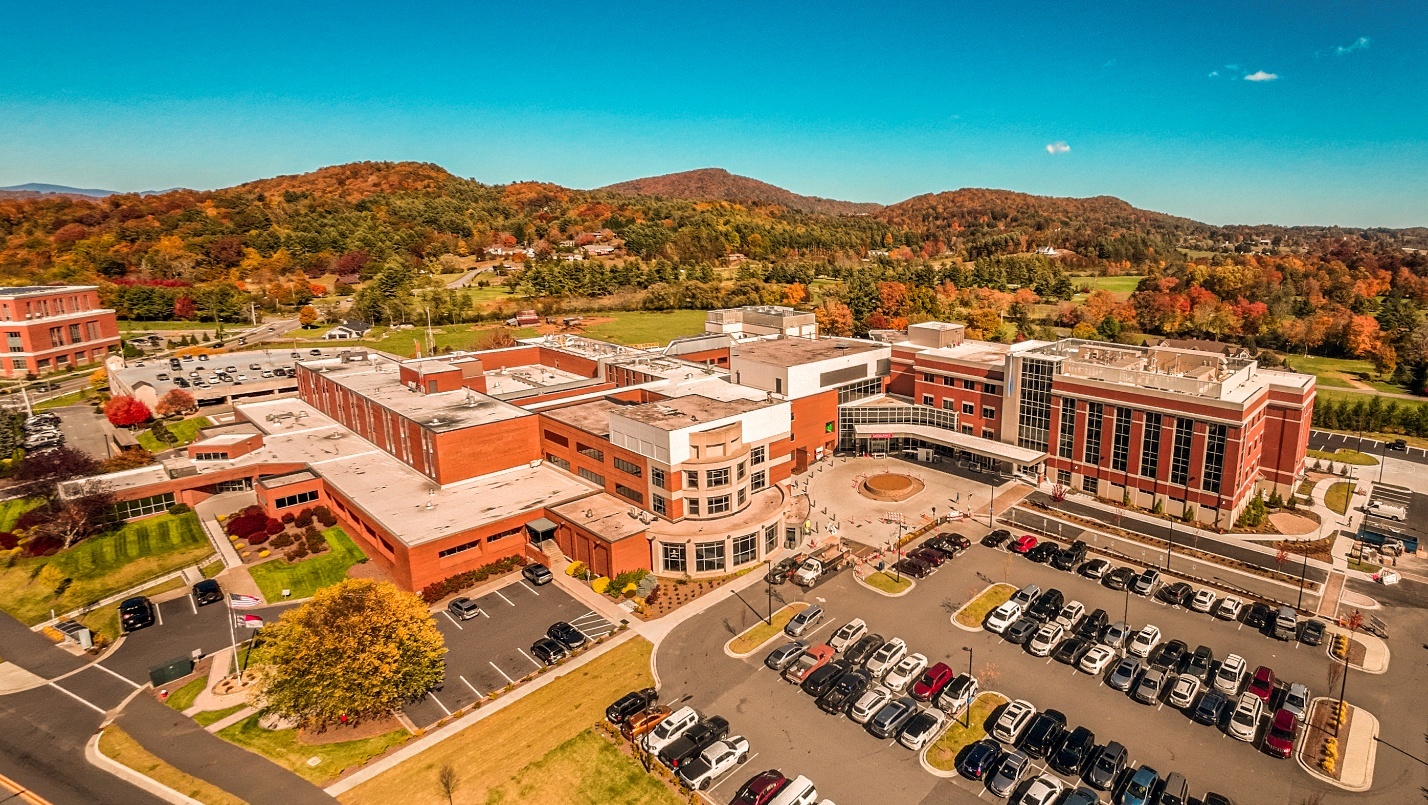
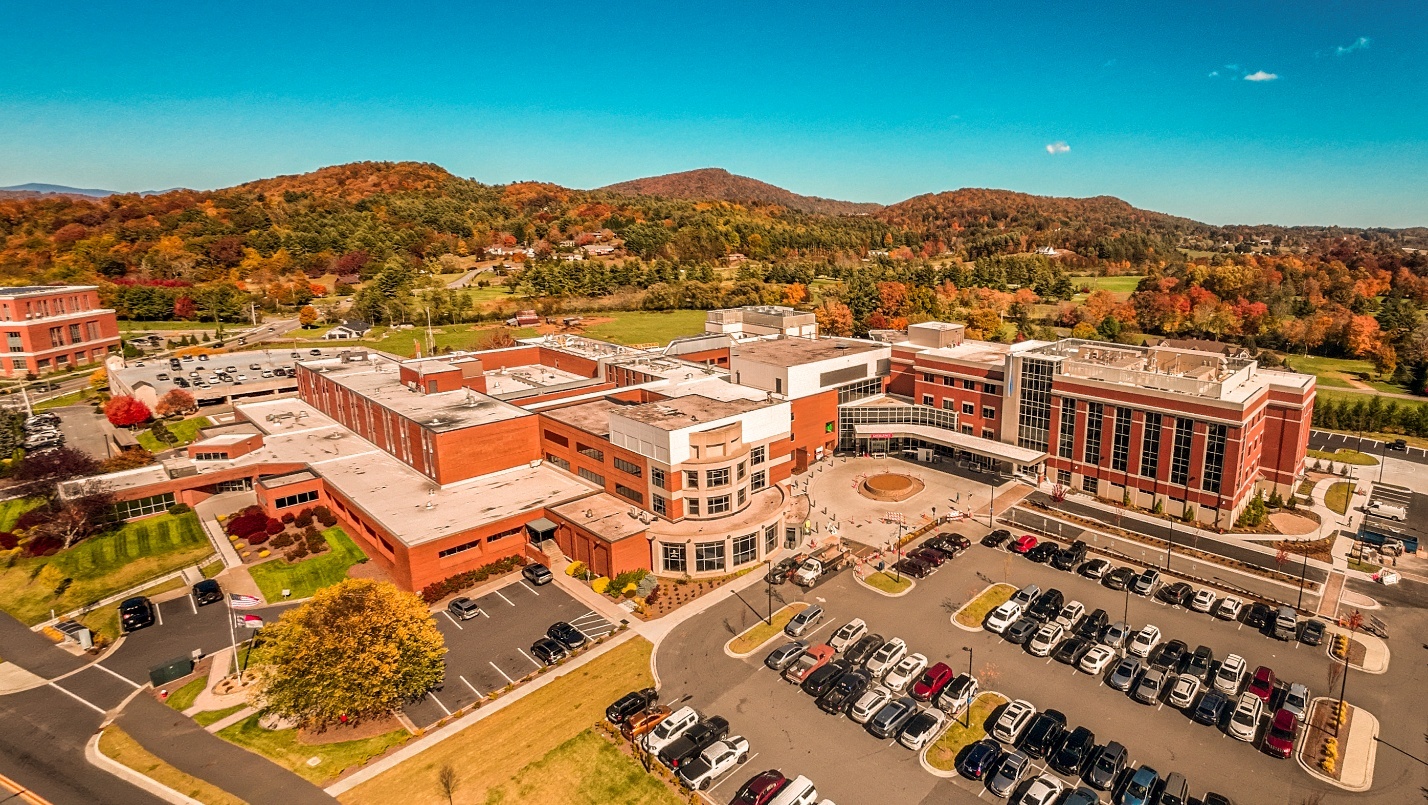
UNC Health Appalachian, known as Appalachian Regional Healthcare until it rebranded in July 2023, is a locally owned health care authority operating three hospitals. These hospitals are all designated as rural by the Federal Office of Rural Health Policy. Watauga Medical Center (as shown in Figure 1) is a 121-bed acute care hospital in Boone that is paid as both a Sole Community Hospital and a Rural Referral Center. In neighboring non-metropolitan Avery County, the system operates Charles A. Cannon, Jr. Memorial Hospital, a 23-bed Critical Access Hospital where residents rotate, and the 27-bed Appalachian Regional Behavioral Health facility.5,6
UNC Health Appalachian created a new primary care clinic, AppFamily Medicine, to serve as the primary continuity site. Through strategic community engagement, the leaders identified other outpatient practices to serve as participating training sites, including hospital-owned clinics, a community health center, private practices, and specialty clinics. This combination of outpatient and inpatient sites, as shown in Table 1, helped make full-spectrum training possible within close proximity. With the help of MAHEC’s national reputation and mission, a program director was identified after a recruitment post on a residency program director’s listserv. Early on, initial faculty members were drawn from experienced local family physicians in the community. The program progressed rapidly from planning to implementation, achieving accreditation from the Accreditation Council for Graduate Medicine Education (ACGME) and welcoming its inaugural residents in 2020.
The residents spend more than 90% of training time in rural settings. The curriculum is specifically designed to provide the breadth and depth required for rural primary care, equipping them to care for patients across the lifespan—from newborns to parents and families to geriatric patients. Almost all residency faculty completed fellowships to further hone teaching and clinical skills. The curriculum has unique components focused on wilderness medicine and even disaster relief, which proved invaluable during Hurricane Helene. All the MAHEC residencies offer a path for residents to get intensive training in lifestyle medicine, which emphasizes nutrition and exercise as treatments for chronic diseases like high blood pressure and diabetes.
Impact of the Residency
Even early into the development, bringing the residency to the community helped expand access to primary care, behavioral health care, and prenatal care. As a result of the residency, UNC Health Appalachian has hired 14 new family medicine physicians who now practice in inpatient and outpatient settings, serve as core and community faculty, and hold leadership positions across the institution. The appeal of teaching and the ability to practice full-scope family medicine have attracted high-caliber family physicians from other MAHEC training sites and from across the country. By offering a broad spectrum of care, they have been able to deliver a wide array of medical care to patients both in outpatient and inpatient settings. These services offered by residents and faculty include but are not limited to sports medicine, pediatric care, maternity care, procedures, and substance use disorder (SUD). In the inpatient setting, family medicine residents and faculty provide year-round coverage for a dedicated service, preserving continuity for hospitalized clinic patients and providing clinical coverage equivalent to two full-time hospitalists.
In the first year of the residency, 2020–2021, four residents completed 956 patient visits at the residency continuity clinic, AppFamily; in 2025–2026, 18 residents completed 9291 patient encounters at AppFamily. In June 2026, at AppFamily, the time to next-available new patient appointment was three days, and the time to third-next-available patient appointment was five days (down from the regional wait time of 34 days in 2019).2,7 Elk River Medical Associates, a longstanding primary care practice with over 3600 patients in Avery County, was threatened with closure due to retiring physicians. In 2024, the residency directly supplied two faculty physicians and longitudinal residents to fill the primary care needs and add new services, including SUD, sports medicine, maternity, pediatrics, and newborn care. In addition, two MAHEC graduates will be joining the practice in 2027.
Access to labor and delivery and the lack of maternity care providers have impacted patients in the rural Appalachian region. Beginning in July 2020, the program’s faculty and residents introduced family medicine obstetric services to Watauga County, becoming the first family physicians to provide maternity care and deliveries in the county. Since 2020, family medicine residents have performed over 600 vaginal deliveries at Watauga Medical Center. Three family medicine faculty members are integrated into a shared low-risk laborist call pool with midwives, which offers patients continuity with their resident physician throughout the entire perinatal period, followed by the opportunity to maintain primary care continuity for themselves and their newborns. They also support transfer of low-risk pregnant patients from the Watauga Health Department to UNC Health Appalachian during the late third trimester, facilitating continuity through delivery and postpartum for some of the county’s most vulnerable patients.
Half of the rural counties adjacent to the residency program have high rates of overdose deaths per the North Carolina Division of Public Health, and more than half of Western North Carolina citizens reported negative impacts of substance misuse.8,9 The residency has improved access to SUD treatment through integration of medications for opioid use disorder into the primary care setting and through collaboration with community organizations like High Country Community Health and the Homestead Recovery Center. These collaborations have helped leverage opioid settlement funds to develop new and innovative care serviced by faculty and residents for the community, such as emergency department referral systems, staff education, and peer support services.
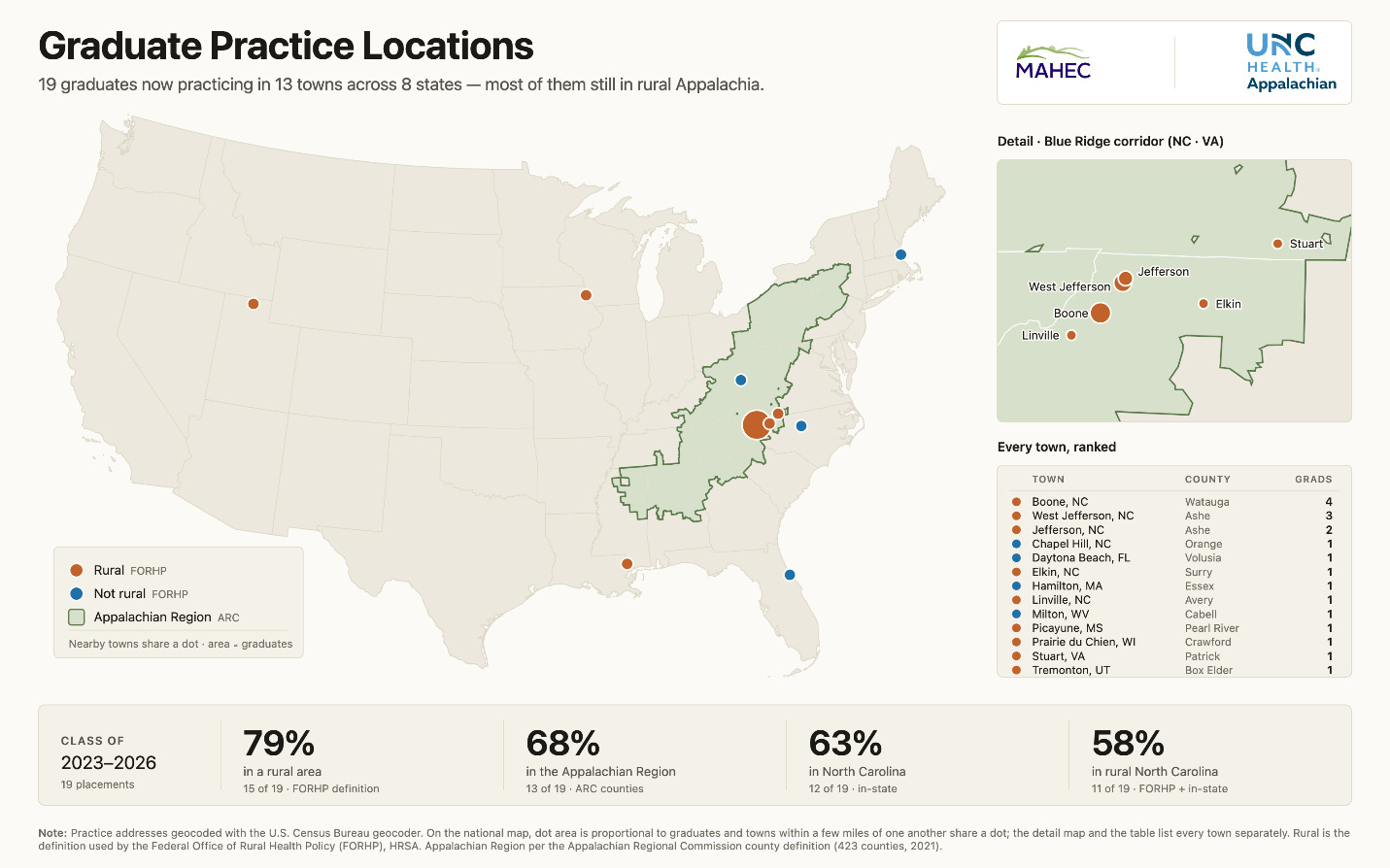
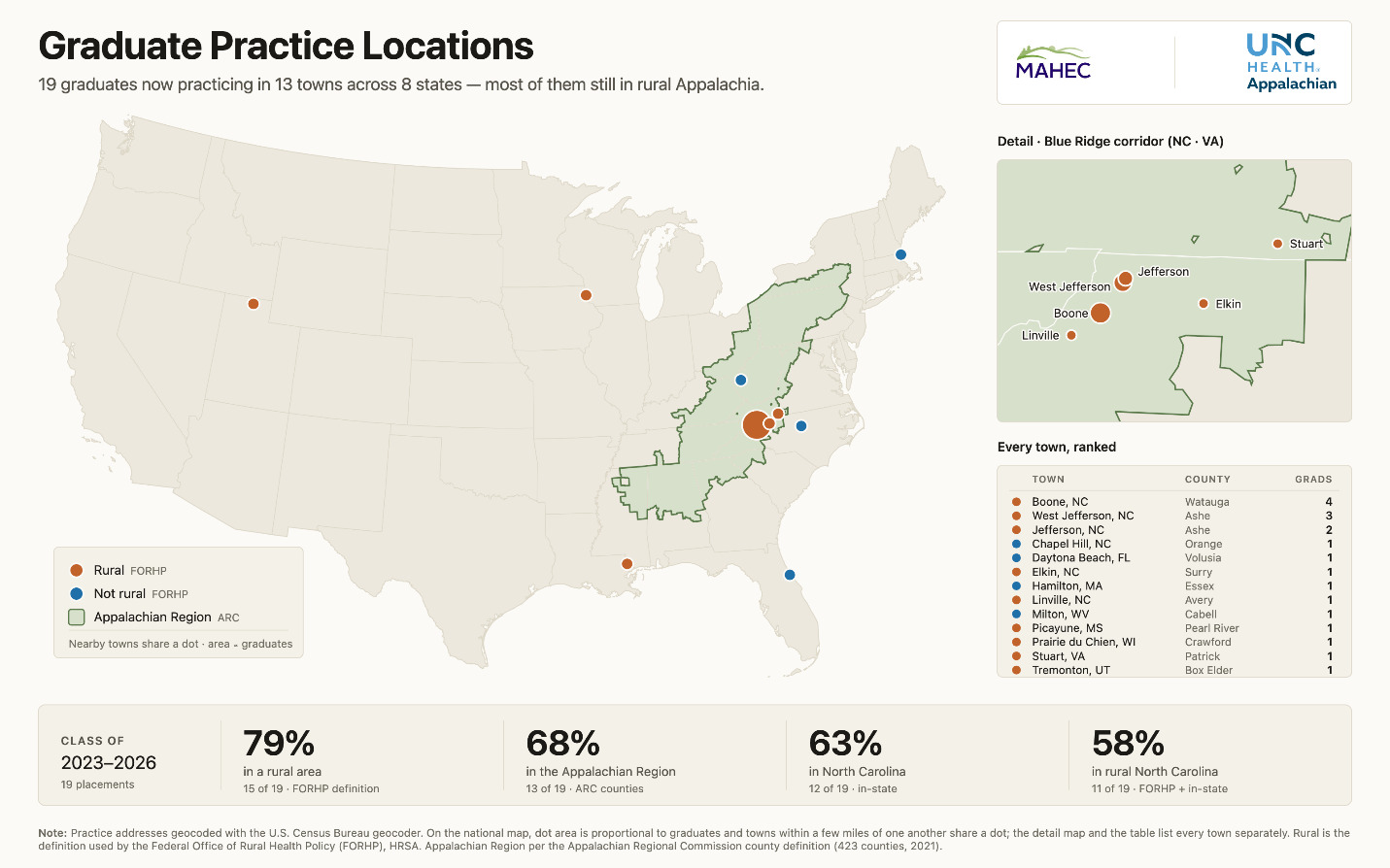
After intentionally starting with smaller classes, the program is now training a complement of 18 residents per year (6 per class). The program has produced 19 graduates, with 15 still practicing in rural locations (11 practicing in rural locations within the state) and most continuing to teach residents and students in their rural settings. Figure 2 displays the graduate practice locations. Interestingly, three of the graduates finished training and created a brand-new primary care clinic in an adjacent rural county with even more challenges around primary care access. One of the graduates joined a local independent family medicine clinic, and the practice went from not accepting new patients to accepting new patients. In the words of Dr. Charlie Baker, a longstanding family physician in the High Country,
“I was in full spectrum family medicine in Avery County for 40 years, and we were short staffed with primary care the entire time. Now, after graduating four classes of family medicine residents, we have near sufficient numbers of physicians to meet the community needs and are supplying nearby counties.”
The residency has expanded training experiences and interprofessional collaborations. The residency has supported rotations for 21 medical students from schools across the country, including the UNC School of Medicine and its branch campus at MAHEC in Asheville, as well as East Carolina University, Campbell University, and East Tennessee State University. Seven of these students later matched into the MAHEC Boone program, and one returned to join the teaching faculty after completing residency training elsewhere. The program also offers interprofessional learning experiences. With support from a Rural Teaching Hub grant from North Carolina Area Health Education Centers (NC AHEC), medical students learn alongside physician assistant students from Wake Forest University in a unique collaborative paired learning model.10 Residents and faculty are actively engaged in encouraging health professional training through partnerships at Appalachian State University; most recently, the MAHEC Boone program launched a narrative medicine curriculum focused on empathy and humanistic care in partnership with the Department of English at Appalachian State University.
Further graduate medical education (GME) expansion is underway. North Carolina has had no rural general surgery residency programs, yet 1 in 4 of the state’s counties do not have an actively practicing general surgeon. Through the start-up of the residency, UNC Health Appalachian established a partnership with MAHEC as sponsoring institution and the local educational infrastructure and now have an eager group of rural surgeons (some of whom are nearing retirement) that are starting the state’s first rural surgery track. They also plan to create a rural psychiatry residency at Appalachian Regional Behavioral Health in Avery County, where access to psychiatry currently takes months. Two $750,000 start-up grants through the UNC System Rural Residency Medical Education and Training Fund will support the development of the rural surgery and psychiatry programs.11–14
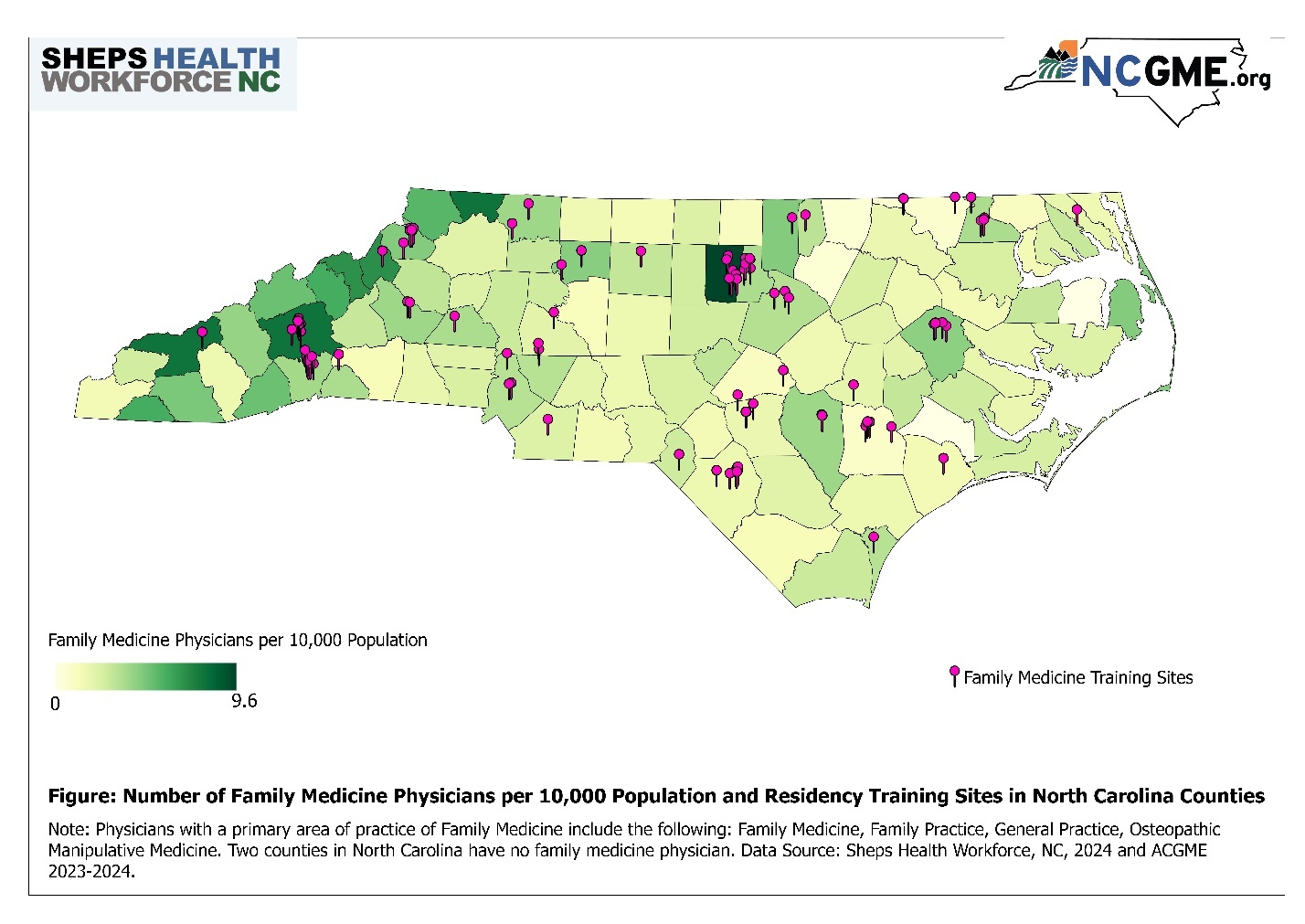
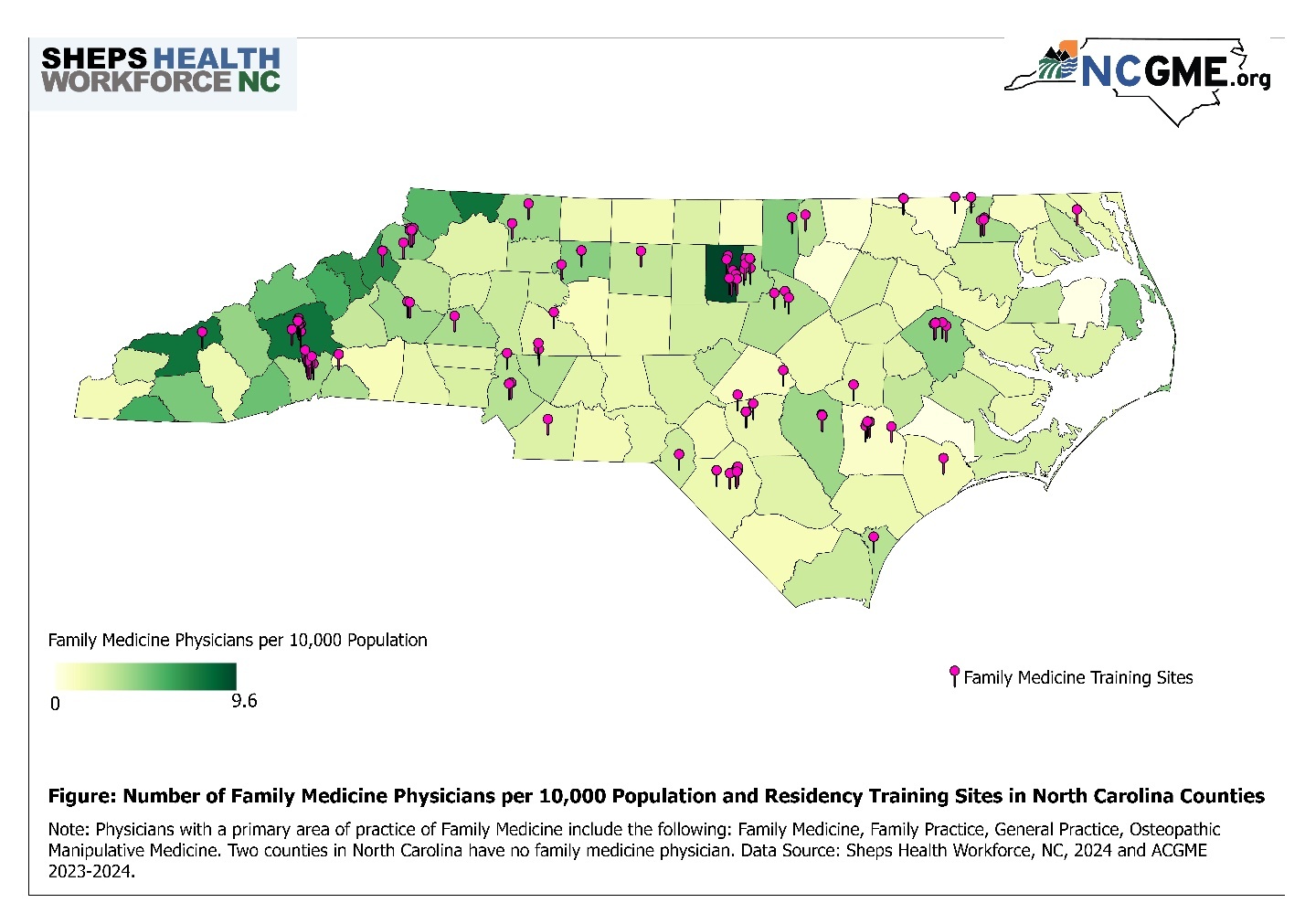
MAHEC’s vision to bring residency training proximal to the communities served, starting in Hendersonville and now reaching 16 of the westernmost counties, has contributed to the recruitment and retention of physicians in the region. As shown in Figure 3, western counties of the state have a higher family medicine physician supply per population (i.e., darker green) compared to the other counties.15,16
Lessons Learned
Rural residency is a solution to help address access to care in rural communities, and many rural health facilities want to host programs. Program development is a complex, multifaceted endeavor that requires strong partnerships, specialized expertise, and sustained commitment to navigate successfully. Funding and policies that support residency development and sustainability are essential. Start-up one-time-only funding paired with technical assistance—through Rural Residency Planning and Development,3 the UNC System Rural Residency Medical Education and Training Fund,13 and the newly launched Rural Health Transformation Program17—directly assists communities with needed initial investment to plan and build programs. Sustainability funding, primarily Medicare financing, is necessary to cover ongoing residency operations. Given UNC Appalachian’s hospital status as a Sole Community Hospital, they do not obtain full Medicare reimbursement for training. To fill the deficit, the program receives Medicaid GME dollars and recently secured financing through the UNC System Rural Residency Medical Education and Training Fund.13,16,18 Increasing the rural physician workforce takes multiple levers. Graduates have benefited from state programs, like loan repayment provided through the North Carolina Office of Rural Health.19 Pathway initiatives through AHEC have further augmented physician recruitment through various stages of education.10
Despite these early successes, significant challenges persist. AppFamily has outgrown their clinic space, and their campus does not have educational space for didactics. Housing challenges for faculty and residents prevail throughout the High Country, with Watauga ranking last for affordability in all North Carolina counties.20 Continued residency success at the institution will depend on sustained collaboration between residency and executive leadership. Integrating educational priorities into clinical strategy, operational planning, and resource allocation will ensure that GME remains aligned with and strengthens the broader clinical enterprise.
In conclusion, workforce expansion is often one of the earliest measurable outcomes of rural residency development. Beyond these immediate gains, training physicians in comprehensive, community-based rural practice creates a multigenerational impact by cultivating clinicians who are more likely to stay in the area and are prepared to meet the evolving health needs of rural populations.
Acknowledgments
Financial Support
The authors are grateful for the many community partners and training sites (see Table 1) that make the residency possible. The program has received funding from the Health Resources and Services Administration Rural Residency Planning and Development Program, UNC System Office, as well as North Carolina Area Health Education Centers. The contents are those of the author(s) and do not necessarily represent the official views of, or an endorsement by, these funders.
Conflict of Interest
None of the authors have conflicts of interest to report.