How Can North Carolina Strengthen Rural Communities by Building Sustainable Systems That Improve Health?
Rowan County, North Carolina, is a rural Piedmont community of approximately 155,000 residents located along the Charlotte metro corridor, with a population that is roughly 76% White, 17% Black, and 13% Hispanic. The county’s median household income of $65,173 trails state and national levels, and the poverty rate (14.4%) remains higher than statewide and national averages. Like many rural communities, Rowan County has experienced significant impacts from the opioid epidemic, with substance use remaining a persistent public health concern for residents and community partners alike.
Strengthening health in rural communities requires more than expanding access to medical care. Lasting improvements in health outcomes depend on investments in sustainable systems that address the complex factors influencing well-being, including housing stability, food access, transportation, employment, behavioral health, and social support. While substance use treatment and overdose prevention remain critical priorities, communities are most successful when they view health through a broader public health lens.
Rowan County Public Health’s (RCPH) approach to implementing harm reduction strategies through opioid settlement funding demonstrates the value of this comprehensive framework. Rather than focusing exclusively on overdose prevention, RCPH has used settlement funding to strengthen partnerships, expand access to care, and build a coordinated system that supports individuals at every stage of their recovery journey. Harm reduction serves as an entry point for engagement, creating opportunities to address both immediate health concerns and the broader social needs that often contribute to substance use disorders.
RCPH recognized that reducing overdose deaths required engaging individuals long before they entered formal treatment. Harm reduction strategies were selected because they are evidence-based approaches that save lives, reduce the transmission of infectious diseases, increase engagement with health care systems, and create opportunities to connect individuals to treatment and recovery services when they are ready.1 By meeting individuals where they are, the department has been able to build trust and establish pathways to care that might not otherwise exist. This approach creates a “no wrong door” opportunity to reach individuals.
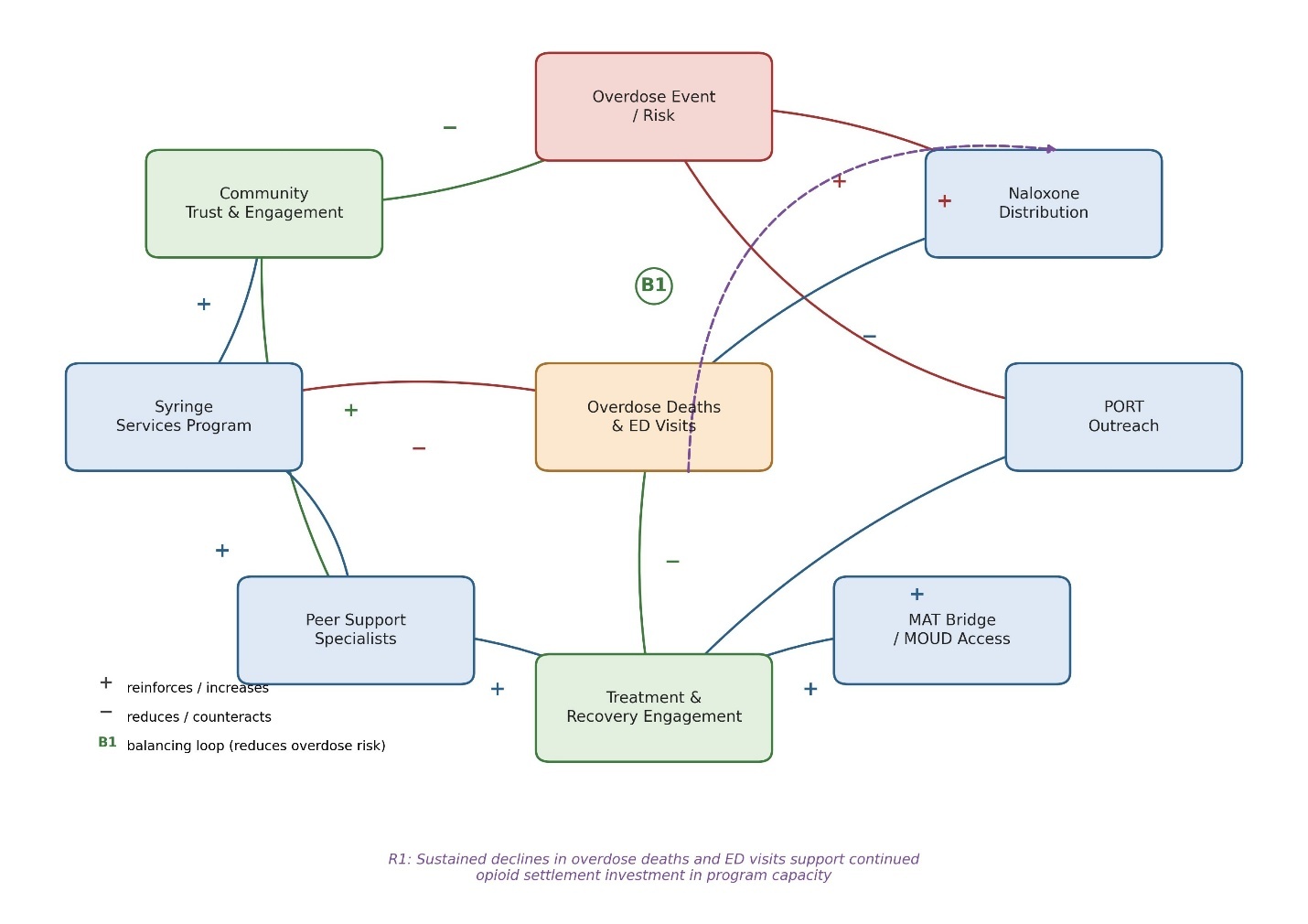
Using opioid settlement funding, Rowan County has expanded a comprehensive harm reduction framework, carried out through the county’s HOPE (Harm Reduction, Outreach, Prevention, and Education) program, that includes community naloxone distribution, peer support services, the Syringe Services Program (SSP), the Post Overdose Response Team (PORT), Medication-Assisted Treatment (MAT) Bridge services, and early intervention initiatives. These programs are intentionally connected to create multiple opportunities for engagement while supporting individuals across a continuum of care (Figure 1).
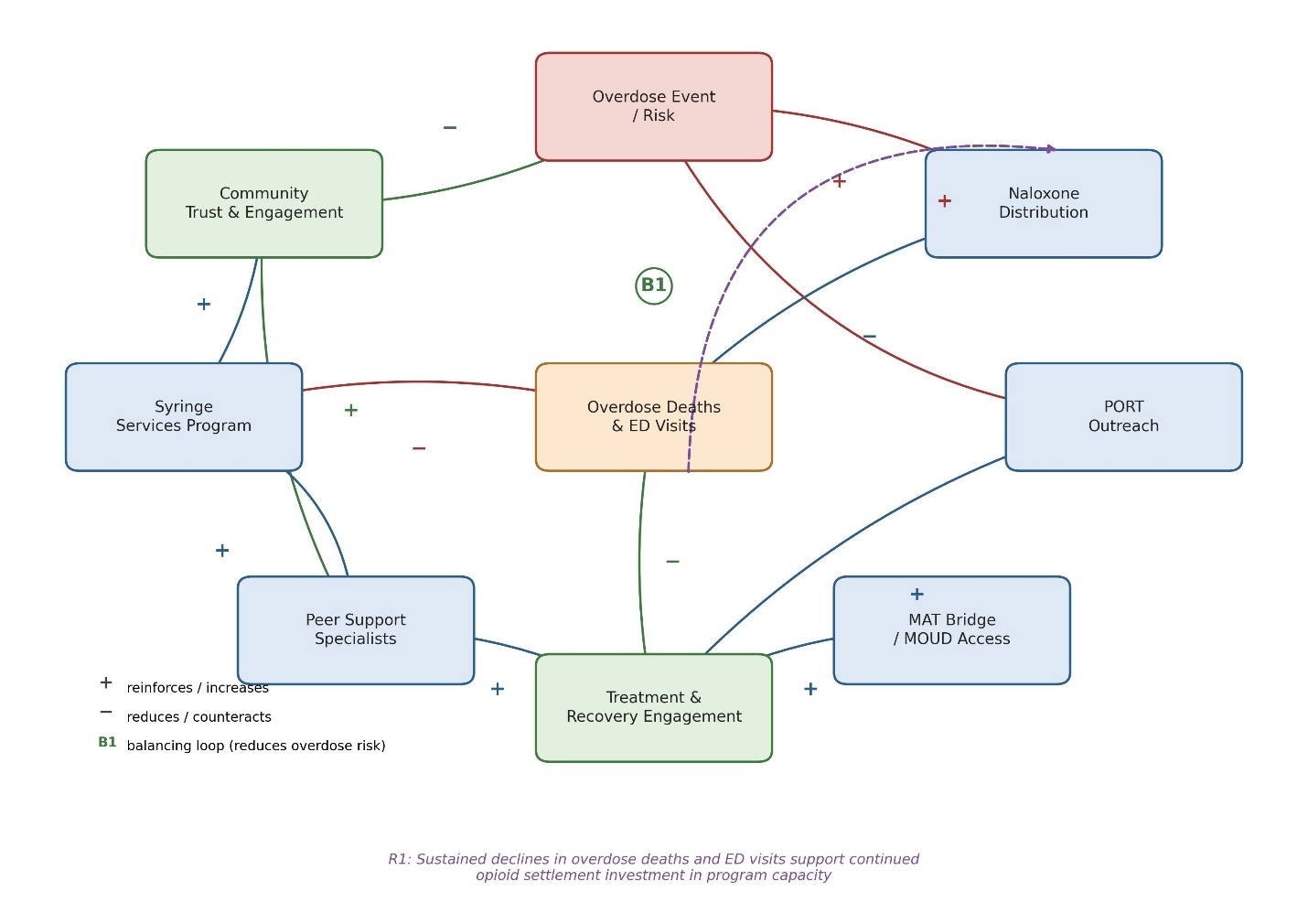
Naloxone distribution and syringe services provide immediate overdose prevention and disease reduction benefits while building trust with individuals who use substances.2,3 Peer support specialists offer lived-experience guidance and help connect individuals to treatment, recovery, housing, employment, and other community resources.4 PORT, developed in partnership with Rowan County EMS, engages individuals following an overdose and connects them to care during a critical intervention window.5–7 MAT Bridge services reduce gaps between emergency care and ongoing treatment, while early intervention efforts focus on identifying and supporting individuals before or during substance use.8 Early intervention efforts include settlement-funded awards to community and school partners, such as trauma-informed parenting and caregiver-child relationship programs and a dedicated youth substance use navigator embedded within Rowan-Salisbury Schools, extending the harm reduction system’s reach into prevention work with youth and families.
A critical component of sustainable system building is understanding community needs through data. Through the opioid settlement, RCPH conducts a collaborative strategic planning process every three years, bringing together community partners, service providers, stakeholders, and residents to assess local needs, review emerging trends, evaluate funded strategies, and identify service gaps. This process supports meaningful community input while strengthening the collection and analysis of data related to substance use, overdose, treatment engagement, and recovery outcomes.
RCPH also holds an annual public meeting, required under the settlement’s memorandum of agreement, to report on funded initiatives and priorities directly to residents, reinforcing transparency and accountability. By continuously evaluating existing efforts and using data to guide investments, the department is able to adapt its approach, direct resources where they are needed most, and ensure that funded initiatives remain responsive to changing community needs.
Ultimately, North Carolina can strengthen rural communities by supporting locally driven solutions that address the full spectrum of health and social needs. Sustainable improvements occur when communities build systems that connect individuals not only to health care, but also to the resources and opportunities that support long-term well-being. Rowan County Public Health’s experience demonstrates how harm reduction can serve as a foundation for broader community health improvement when integrated into a coordinated, community-centered system of care.
What Opportunities and Risks Do Emerging Policy, Funding, Demographic, and Technological Changes Present for Rural North Carolina?
Recent investments in behavioral health and substance use services have created unprecedented opportunities for rural communities across North Carolina. Opioid settlement funding, in particular, has allowed communities to expand services, strengthen partnerships, improve data collection, and develop long-term strategies that address the root causes of poor health outcomes.
For Rowan County, settlement funding has provided a unique opportunity to strengthen harm reduction efforts and invest in a more comprehensive continuum of care. While programs such as PORT and community naloxone distribution began in 2019, opioid settlement funding received in 2023 enabled public health to significantly expand outreach, engagement, care coordination, and service delivery. These investments have strengthened partnerships among public health, emergency medical services, health care providers, behavioral health organizations, law enforcement agencies, criminal justice partners, and outpatient treatment providers.
The impact of these efforts is reflected in several encouraging trends. According to the North Carolina Overdose Epidemic Data Dashboard, emergency department visits for overdose in Rowan County declined from a peak of 362 visits in 2023 to an estimated 212 visits in 2025. During the same period, illicit opioid overdose deaths declined from an estimated 106 deaths in 2023 to 40 deaths in 2025.9 These trends suggest comprehensive, community-based harm reduction strategies contribute to meaningful public health improvements. Residents’ own perceptions echo this shift: in Rowan County’s most recent Community Health Needs Assessment, substance use fell to the seventh-ranked community health concern, a marked decline from prior assessment cycles.
Beyond funding opportunities, demographic and technological changes present additional opportunities for innovation. Rural communities continue to evolve and become increasingly diverse, requiring service systems that reflect the unique cultural, racial, ethnic, and socioeconomic characteristics of the populations they serve. Local data allows communities to identify emerging needs and tailor services accordingly.
Rowan County’s own surveillance data illustrate this need directly. Overdose deaths, once concentrated among younger White residents, have shifted increasingly toward older Black men.10,11 In response, Rowan County Public Health is working to move harm reduction access points out of clinical and governmental settings and into institutions this population already trusts, where leadership and community standing offer a natural point of connection.12 This kind of targeted, data-informed response is what it looks like for a rural health system to reflect the populations it serves.
Technology plays a role as well, primarily through better data. Shared overdose surveillance, such as the North Carolina Overdose Epidemic Data Dashboard, and closer data coordination among EMS, hospitals, and public health allow Rowan County to track trends and target outreach in something closer to real time.
However, one of the greatest challenges facing rural communities is ensuring that short-term funding leads to sustainable, long-term impact. Communities must balance the need to respond to urgent public health concerns while investing in infrastructure, workforce development, and systems capable of lasting beyond a specific funding source. In Rowan County, this has meant using settlement funds to create dedicated positions, including a program specialist who manages the grant lifecycle for community sub-awards and a program manager who oversees strategy implementation, so that settlement-funded work is coordinated rather than layered onto existing staff capacity.
Rowan County Public Health’s experience illustrates both the opportunities and challenges facing rural North Carolina as new funding, policy priorities, and technological innovations reshape the behavioral health landscape. The county is projected to receive approximately $28.2 million in opioid settlement funds between 2022 and 2038, with payments front-loaded during the early years and smaller allocations continuing over time.13 Recognizing the importance of preserving resources for future needs, Public Health Director Alyssa Harris and community stakeholders developed a workplan and funding strategy that prioritizes the county’s most pressing substance use and overdose prevention needs while maintaining flexibility to adapt as conditions change.
Rather than expending funds as they are received, Rowan County has intentionally planned expenditures to ensure strategies remain sustainable throughout the life of the settlement. The county’s 3-year strategic planning cycle allows the community and partners to review community needs, evaluate outcomes, assess emerging trends, and realign investments as necessary.14 This approach balances immediate action with long-term planning and helps ensure that effective initiatives can continue to serve residents as the substance use landscape evolves.
What Evidence, Partnerships, and Investments Are Most Likely to Produce Lasting Results?
Evidence increasingly demonstrates that communities achieve the greatest impact when they invest in coordinated systems of care rather than isolated interventions. Recovery from substance use disorder is rarely a linear process, and lasting results are most likely when individuals encounter support at multiple points throughout their journey, from active substance use and overdose response to treatment, recovery, and community reintegration.
One of the most important investments a community can make is in strong cross-sector partnerships. Effective partnerships extend beyond traditional health care organizations and include emergency medical services, hospitals, behavioral health providers, public health agencies, law enforcement, criminal justice partners, social service organizations, and individuals with lived experience. Identifying champions within these organizations who understand community needs and are willing to support innovative solutions is essential to sustaining meaningful change.
In Rowan County, opioid settlement funding has strengthened partnerships with Rowan County EMS, local hospital systems, law enforcement agencies, the Rowan County Sheriff’s Office, outpatient treatment providers, and other community organizations. These collaborations create opportunities to engage individuals following an overdose, after hospitalization, while incarcerated, upon release from detention, and throughout treatment and recovery.
The partnership between Rowan County EMS and PORT exemplifies how coordinated responses can improve outcomes. By engaging individuals shortly after an overdose and connecting them to treatment, recovery services, and community supports, PORT transforms a moment of crisis into an opportunity for intervention. Similarly, partnerships with local hospitals help connect individuals to harm reduction services, peer support, and treatment resources upon discharge, reducing gaps in care and increasing opportunities for sustained engagement.
Collaborations with criminal justice partners have also expanded opportunities to support individuals with opioid use disorder and substance use disorders during incarceration and as they transition back into the community. Settlement funding, for example, supports the Rowan County Detention Center’s Medication for Opioid Use Disorder (MOUD) program, which will allow individuals to begin or continue evidence-based treatment while incarcerated rather than facing a treatment gap at release. Because the risk of overdose is especially high following release from incarceration, coordinated reentry planning and linkage to care are critical components of a comprehensive response.15
Perhaps most importantly, Rowan County Public Health’s experience demonstrates that the most valuable investments are those that strengthen relationships and create pathways between services. Harm reduction programs, treatment services, and recovery supports are most effective when they are connected within a larger system designed to meet individuals where they are and support them throughout their recovery journey.
Conclusion
Sustainable results occur when overdose response, emergency medical care, hospitalization, incarceration, treatment, recovery services, and community-based harm reduction programs work together rather than independently. No single agency can address all the needs associated with substance use disorders. However, when organizations share a common vision and collaborate around evidence-based practices, individuals are less likely to fall through service gaps.
Through strategic investment, data-informed decision-making, and strong cross-sector partnerships, RCPH is demonstrating how opioid settlement funds can be leveraged to create lasting systems change. Beyond supporting individual programs, these investments are building community capacity, strengthening partnerships, and laying the foundation for healthier and more resilient rural communities across North Carolina.
Financial Support
The authors received no financial support for this commentary beyond the opioid settlement funds discussed herein.
Declaration of Interests
The authors have no conflicts of interest to disclose.
Correspondence
Address Correspondence to Alyssa Harris, 1811 E Innes St, Salisbury, NC 28146 (Alyssa.Harris@rowancountync.gov).