Introduction
For many families, finding child care is one of the first challenges that follows the birth of a child. In rural North Carolina, that search often becomes an ongoing process of weighing difficult tradeoffs. A program may have an opening but is 30 miles from home. A center may be close to work but has a months-long waiting list. Another provider may have classroom space but not enough teachers to accept additional children. For many families, access is not defined by whether a licensed child care program exists. It is defined by whether care is available when they need it, close enough to reach, affordable enough to use, and stable enough to rely on.
Rural child care shortages are real, but they tell only part of the story. Meaningful access also depends on affordability, location, workforce availability, and the stability of providers. When one part of this system weakens, families may lose access even when demand and physical classroom space remain unchanged. These conditions affect not only parents’ ability to work, but also children’s development and the long-term health and economic vitality of rural communities.1,2
More Than an Available Slot
Research consistently shows that rural child care markets operate differently from those in urban areas. Rural communities have fewer providers, greater travel distances, and smaller enrollment pools, making it more difficult for programs to remain financially sustainable.3,4 In North Carolina, families who live in urban communities are five times more likely to live within a 10-mile radius of a child care facility relative to their non-urban counterparts.5 These conditions create thin markets, where even modest changes in enrollment or staffing can affect a provider’s ability to continue operating.
Those differences become especially apparent when a program closes. In many urban communities, families may have several alternative providers nearby. In rural communities, the closure of a single child care center can eliminate a substantial share of local capacity or remove the only licensed infant classroom within a reasonable driving distance6 The result is not simply fewer available spaces—it is fewer realistic choices for families.
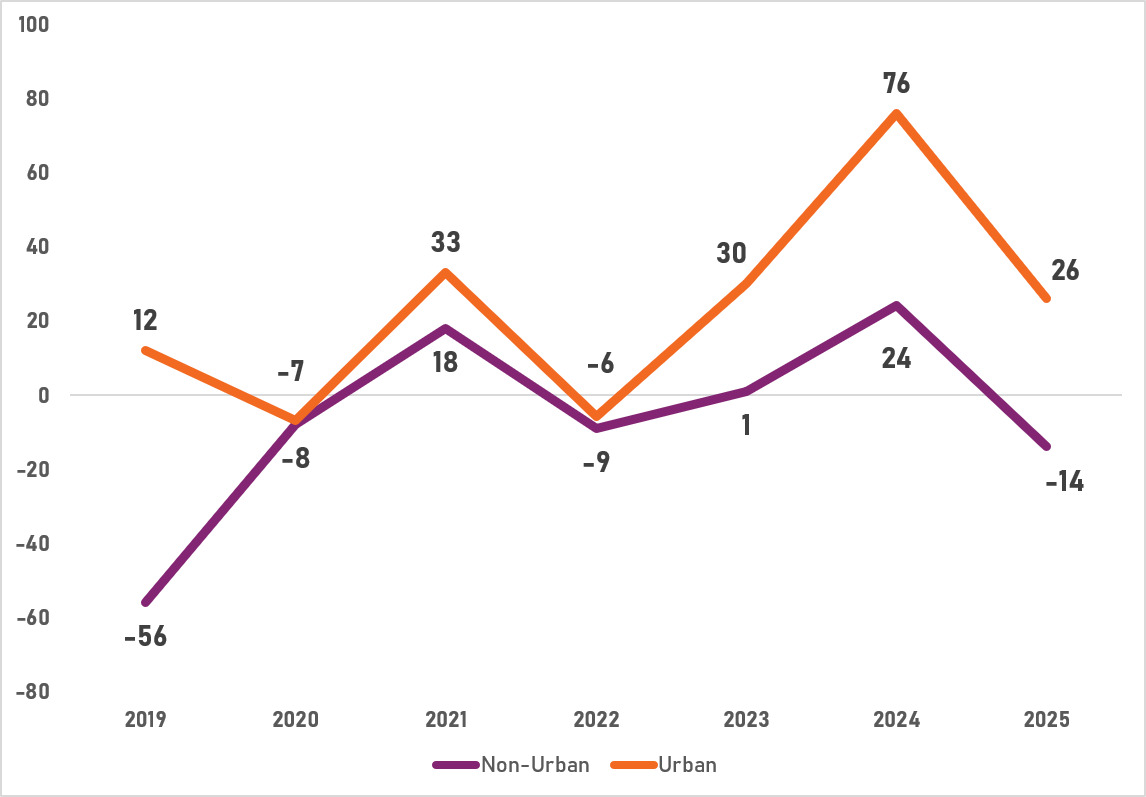
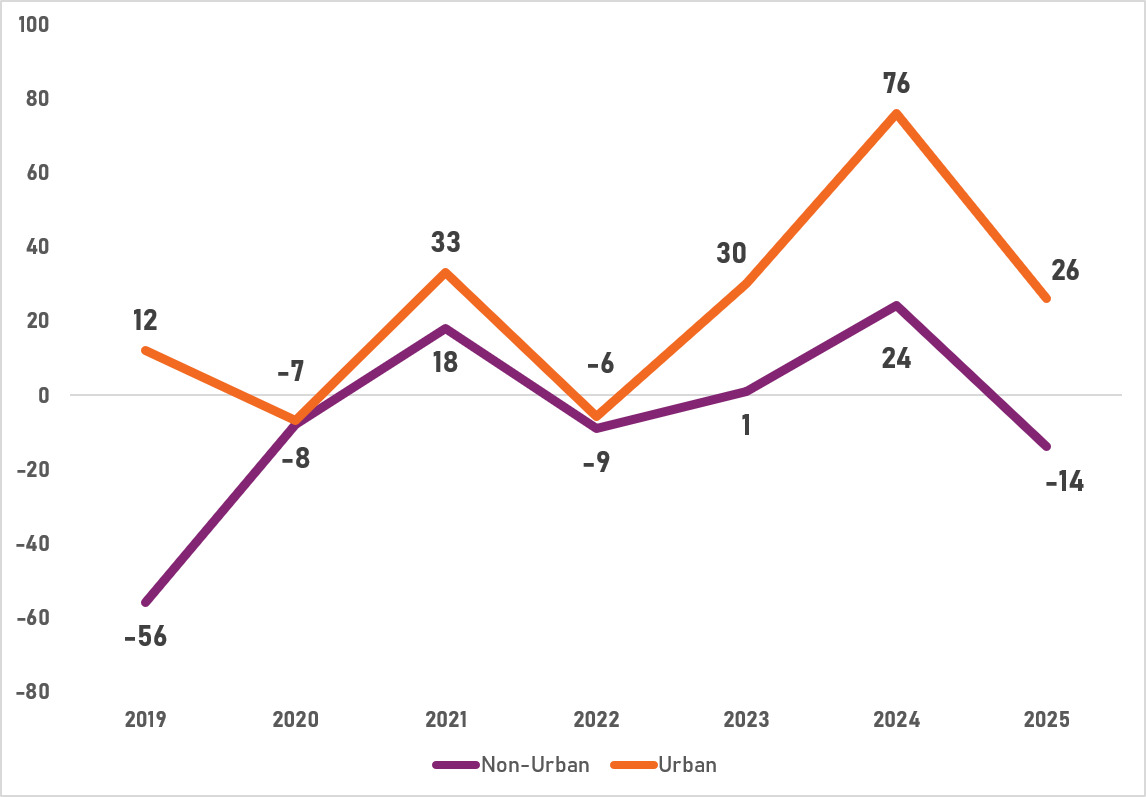
North Carolina reflects these national trends. The NC Rural Center has documented persistent workforce shortages, declining provider capacity, and financial pressures affecting child care programs across rural counties.7 Recent news coverage similarly highlights that child care closures continue to outpace new openings, leaving many communities with fewer options than they had only a few years ago.8,9 Figure 1 illustrates the growing divide between rural and urban North Carolina, with urban counties experiencing more positive net changes in licensed child care providers over time. For families, these trends translate into fewer options, longer travel distances, and greater uncertainty about finding reliable care. For communities, they signal a child care system under increasing strain.
The Conditions That Shape Access
Unlike many businesses, child care programs have limited flexibility to increase revenue. Class sizes are constrained by teacher-to-child ratios, and operating costs remain relatively fixed regardless of enrollment. Providers must cover staffing, facilities, insurance, food, and regulatory requirements while keeping tuition affordable for families. These challenges are not unique to rural communities, but they are often magnified there, where smaller enrollment pools and greater travel distances leave providers with less financial flexibility.3
Workforce shortages have become one of the clearest examples of how provider stability influences access. Across North Carolina, providers report that classrooms remain closed not because physical space is unavailable, but because they cannot recruit and retain enough educators to meet licensing requirements.8,9 In these situations, families experience the problem as a lack of available child care, while providers experience it as an inability to sustain the workforce needed to keep classrooms open.
These challenges reflect broader trends across the early childhood workforce. Professional expectations have grown over the past several decades, but compensation has not kept pace with comparable professions. Administrators, lead teachers, and assistant teachers must complete annual professional development requirements based on their education and experience, which often occur outside of normal operating hours. In North Carolina, educators with a bachelor’s degree must complete at least five hours of training each year, while those with the North Carolina Early Childhood Credential must complete at least 10 hours. Assistant teachers without prior early childhood education may be required to complete 20 hours annually.11 Despite these expectations and the growing complexity of their work, early childhood educators earn an average of just $14.87 per hour.12 Low wages and ongoing professional demands make recruitment and retention especially difficult in communities where child care programs compete with other local employers for workers.
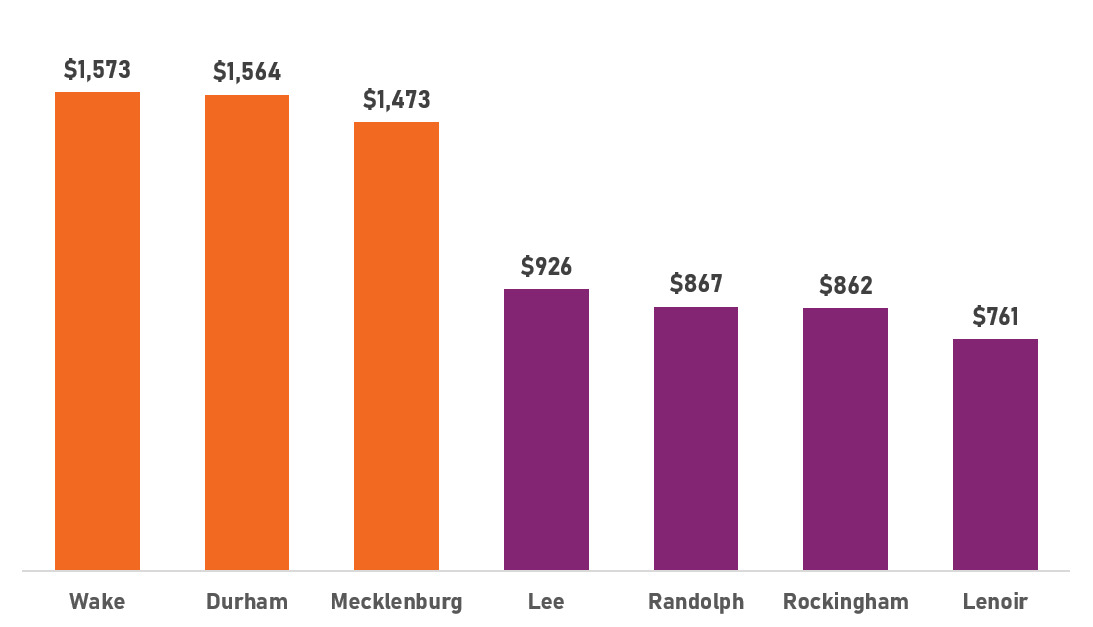
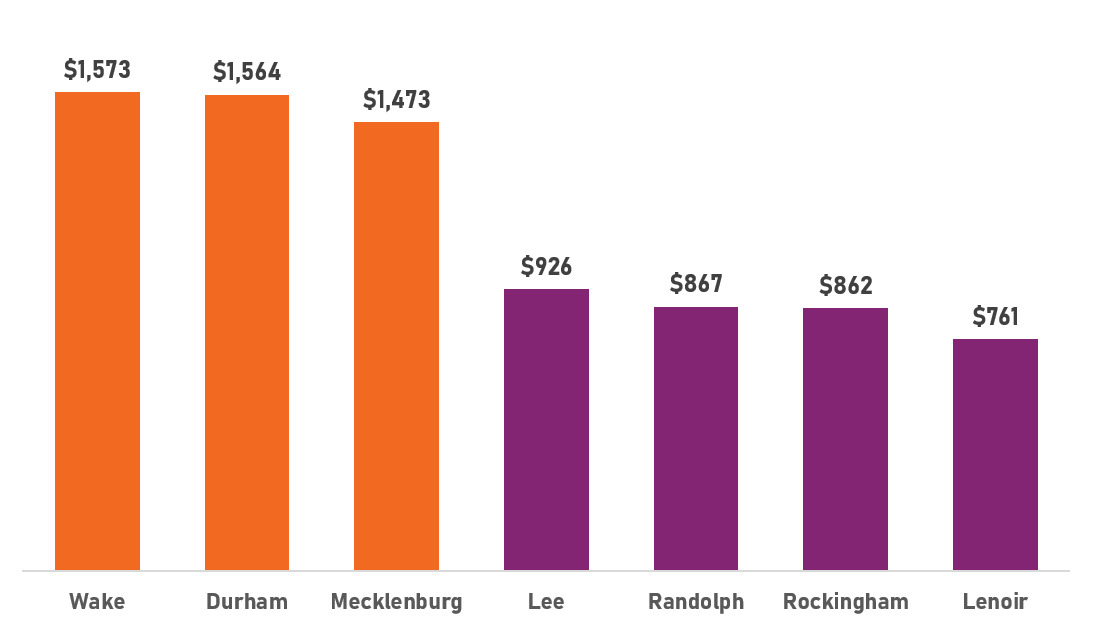
Public policy also shapes provider stability. Child care subsidy reimbursement rates influence the resources available to programs serving families with low incomes, while administrative requirements can affect enrollment stability. Davis and colleagues found that complex subsidy recertification processes contribute to interruptions in subsidy participation, creating uncertainty for both families and providers.13 Additionally, the level of reimbursement varies widely for providers depending on location. Figure 2 highlights another challenge facing rural providers. Across many counties, subsidy reimbursement rates remain lower than those available in urban areas, creating additional financial pressure for providers serving families who rely on child care assistance.
Why Rural Child Care Matters
The effects of limited child care access extend well beyond early childhood education. Stable, high-quality child care provides children with opportunities to develop the language, cognitive, and social-emotional skills that support later academic success. Children who experience frequent disruptions in care, on the other hand, are more likely to experience developmental challenges and less consistent learning environments.15,16
Reliable child care allows parents to work, build financial stability, and support their families’ well-being. Yet in 2024, nearly 100,000 fewer North Carolina parents with young children participated in the workforce than in 2019.17 While child care is not the only factor shaping this change, access to care plays an important role in whether parents can enter and remain in the workforce. This challenge is often more pronounced in rural communities, where fewer child care and employment options can leave families with limited pathways to stable work.
The effects are also felt at the community level. Employers rely on a stable workforce, schools benefit when children enter kindergarten prepared to learn, and local economies are strengthened when families can participate fully in the labor market. Annually, child care issues cost North Carolina $5.65 billion in lost business activity and lost state and local tax revenue.18 Rural counties alone lose $1.1 billion in economic activity.19
In North Carolina’s rural counties, these losses account for a larger share of overall economic activity. In Camden and Harnett counties, for example, child care-related losses represent 2.7% and 2.3% of county GDP, respectively, compared with half a percentage point or less in larger counties such as Wake, Mecklenburg, Guilford, Forsyth, and Durham.19 The reach and scale of these effects make child care essential community infrastructure, with implications for education, workforce development, public health, and economic development.1,6
Building a Stronger Rural Child Care System for North Carolina
The challenges described above require both statewide reforms that strengthen provider finances and local strategies that address specific workforce, affordability, and facility barriers.
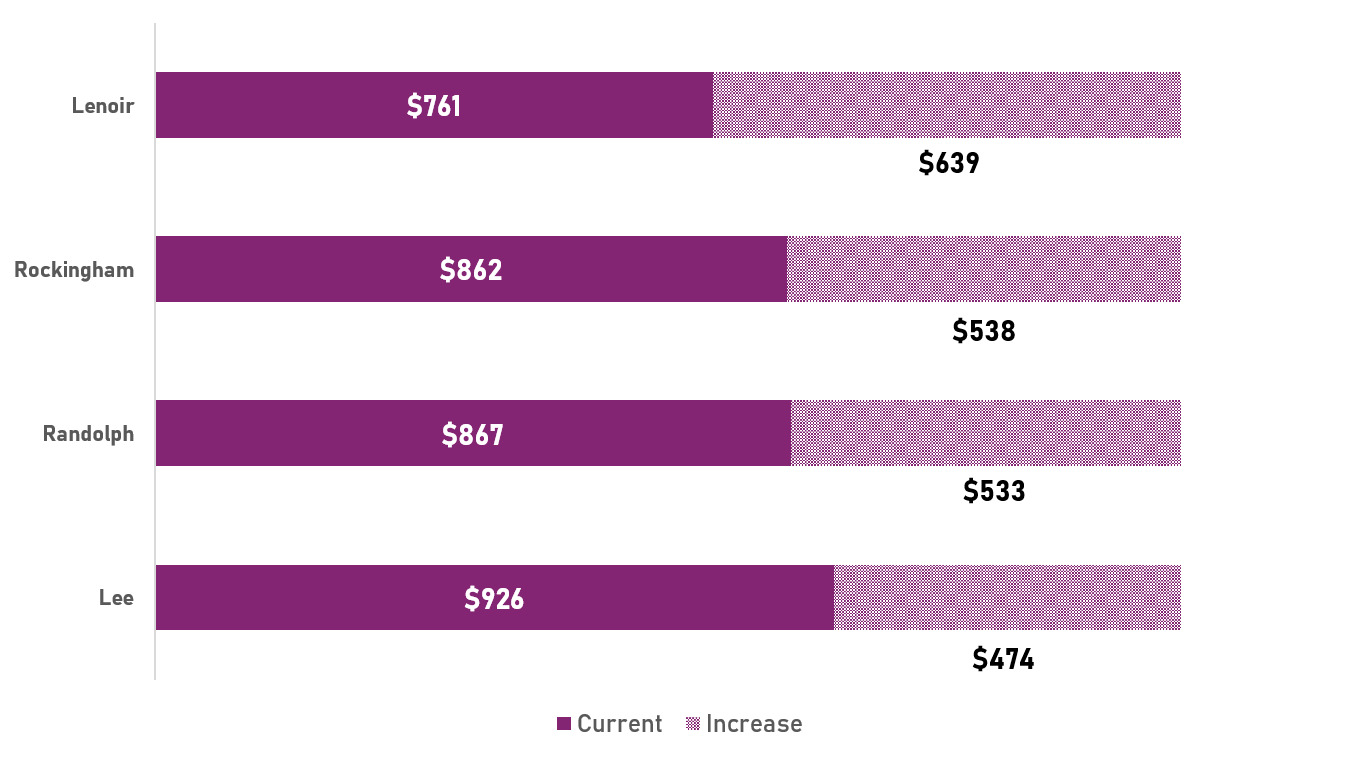
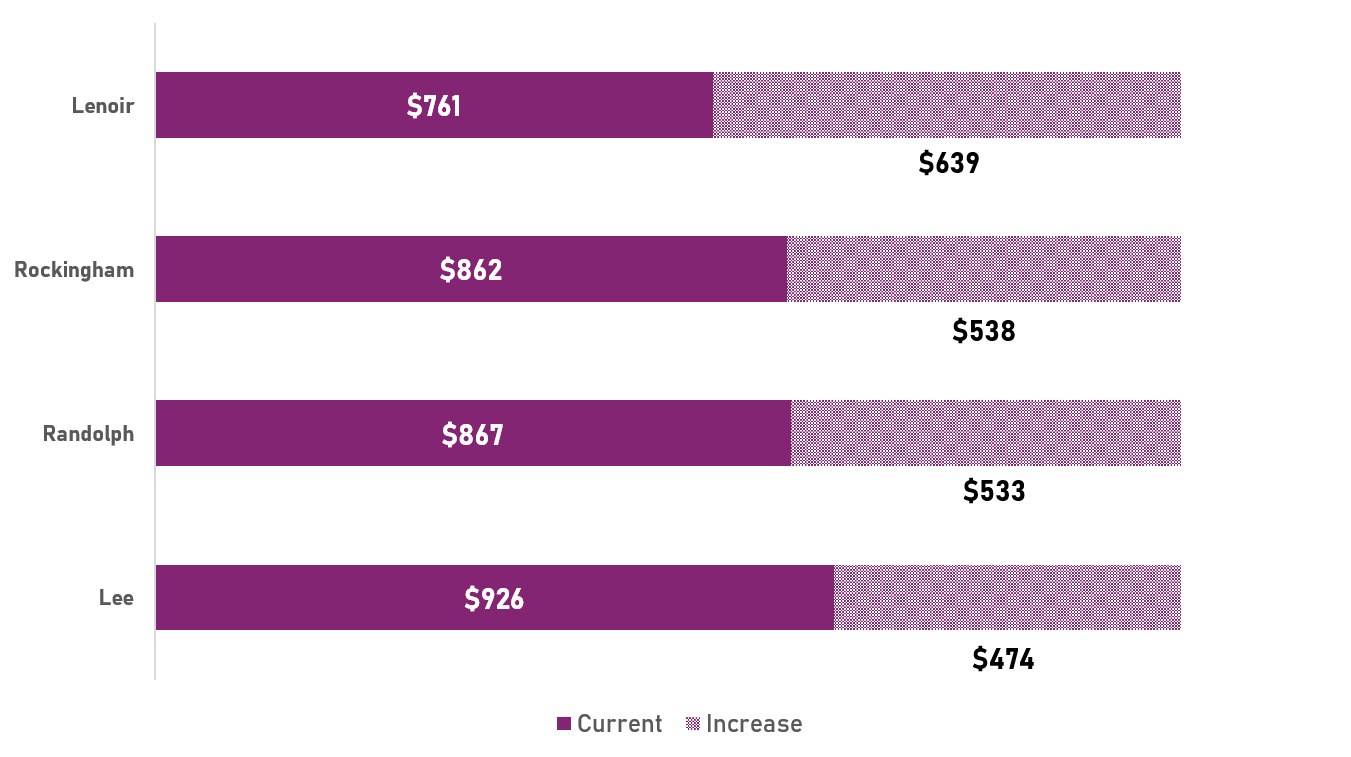
The statewide subsidy reimbursement floor established in the 2026 state budget represents a structural change in how rates are set by ensuring a common minimum based on facility type, quality rating, and age group.20 As Figure 3 illustrates, its impact will be greatest in rural counties with historically lower rates. The monthly reimbursement rate for infant care in a five-star center will rise by $639 in Lenoir County, compared with $204 in Durham County, where the market rate already exceeds the floor. For a provider in Lenoir County, that increase represents up to $7,668 in additional annual reimbursement for each subsidized infant. These larger rural increases can strengthen provider finances, support educator retention, and help programs keep classrooms open in communities with fewer child care options. While the subsidy floor will not resolve every challenge facing rural providers, it creates a more equitable and stable foundation for serving families who rely on child care assistance.
The subsidy floor addresses reimbursement disparities, but additional investments are needed to address the workforce shortages that leave classrooms closed. Initiatives that improve compensation, expand access to benefits, and support professional development can help providers recruit and retain educators, turning unused classroom space into available capacity.9 Predictable reimbursement that is closer to the true cost of child care strengthens these efforts by giving providers greater stability to invest in staff and plan for future enrollment.
At the same time, policy should recognize that no single strategy will address the diversity of rural communities across North Carolina. Local initiatives can address barriers that statewide policy may not reach. In October 2025, the Boone Area Chamber of Commerce Foundation invested $75,000 to provide one month of tuition assistance for the children of child care professionals, offering immediate relief and a model that could be scaled as a longer-term recruitment and retention strategy.22 In Yadkin County, community leaders are developing Mama Jewel’s ChildPlex, a fully equipped, multi-unit facility designed to reduce startup costs and create space for six new child care businesses in response to the community’s multi-faceted needs for greater access to high-quality care.23 Once complete, Mama Jewel’s will offer infant care, which is often in shortest supply in rural counties, as well as non-traditional hours for families working shifts, including first responders and those employed in manufacturing and health care. These examples demonstrate how locally designed solutions can respond to the distinct workforce, economic, and child care needs of rural communities while creating models that may inform broader state investment.
These state and local solutions address different dimensions of the rural child care challenge. The subsidy floor corrects geographic reimbursement disparities and provides rural programs with more reliable operating revenue. Boone’s tuition assistance recognizes that child care professionals also need affordable care to enter and remain in the workforce, while Yadkin’s shared facility reduces the startup and infrastructure costs that limit the development of new programs. These approaches can help existing providers remain open, retain the educators needed to operate classrooms, and create pathways for new programs to enter rural markets. North Carolina has an opportunity to build on recent progress by continuing to invest in provider sustainability while recognizing the unique characteristics of rural child care markets. Doing so will not eliminate every barrier that families face, but it can strengthen the systems that make reliable child care possible.
Conclusion
For years, conversations about rural child care have centered on the number of available spaces. That measure remains important, but it does not fully capture the experiences of families or the challenges facing providers. Access also depends on provider stability, workforce capacity, affordability, geography, and public investment. When providers cannot recruit educators, cover rising costs, or remain financially stable, classrooms close and families lose options. When providers have the resources to remain viable, families gain access to care they can rely on over time.
Rural child care markets operate differently from urban markets and require policies that reflect those differences.3,6 North Carolina’s recent subsidy reforms and locally designed initiatives provide a foundation for continued progress. Sustained investment can help providers remain viable, families maintain employment, children access high-quality early learning, and rural communities build the infrastructure needed to thrive.
Acknowledgments
NC Child gratefully acknowledges the support of our state partners who provided data for the development of this article, including the North Carolina Division of Child Development and Early Education and the North Carolina Department of Commerce. We also thank the thousands of child care providers and early childhood educators across North Carolina who continue to support young children and their families every day. Their dedication serves as the foundation of the state’s early childhood system and the inspiration for this work.
Disclosure of interests
The author has no interests to report.
Financial Support
The author has no financial support to declare.
Correspondence
Address correspondence to Leanna Martin,1103 Haynes St. Suite 103 Raleigh, NC 27604 (leanna@ncchild.org).